What Are Pesticides? How Do They Get into Drinking Water, and Can Water Purifiers Remove Them?
Would you like to listen to this article?
Your browser reads the article aloud.
0:00 total 9:02
Summarise this article with AI:
Pesticide is the general name for chemical substances used to protect plants against
insects, fungi, weeds and other pests. Although they are widely used to increase agricultural yields,
some of these substances can seep into the soil or mix with surface water and reach drinking water
sources. In this article, drawing on scientific sources, we look at how pesticides get into water and which purification
methods are genuinely effective.
Quick summary
● Pesticides can enter water sources through surface runoff and leaching.
● Their solubility in water varies with their chemical structure, which affects how they can be removed.
● Simple sediment filters are inadequate for removing pesticides.
● RO and activated carbon are among the methods that show the highest performance in scientific studies
(in the range of 95–100%, depending on the compound).
● Multi-stage systems provide more comprehensive protection than methods used
on their own.
What are pesticides and what types are there?
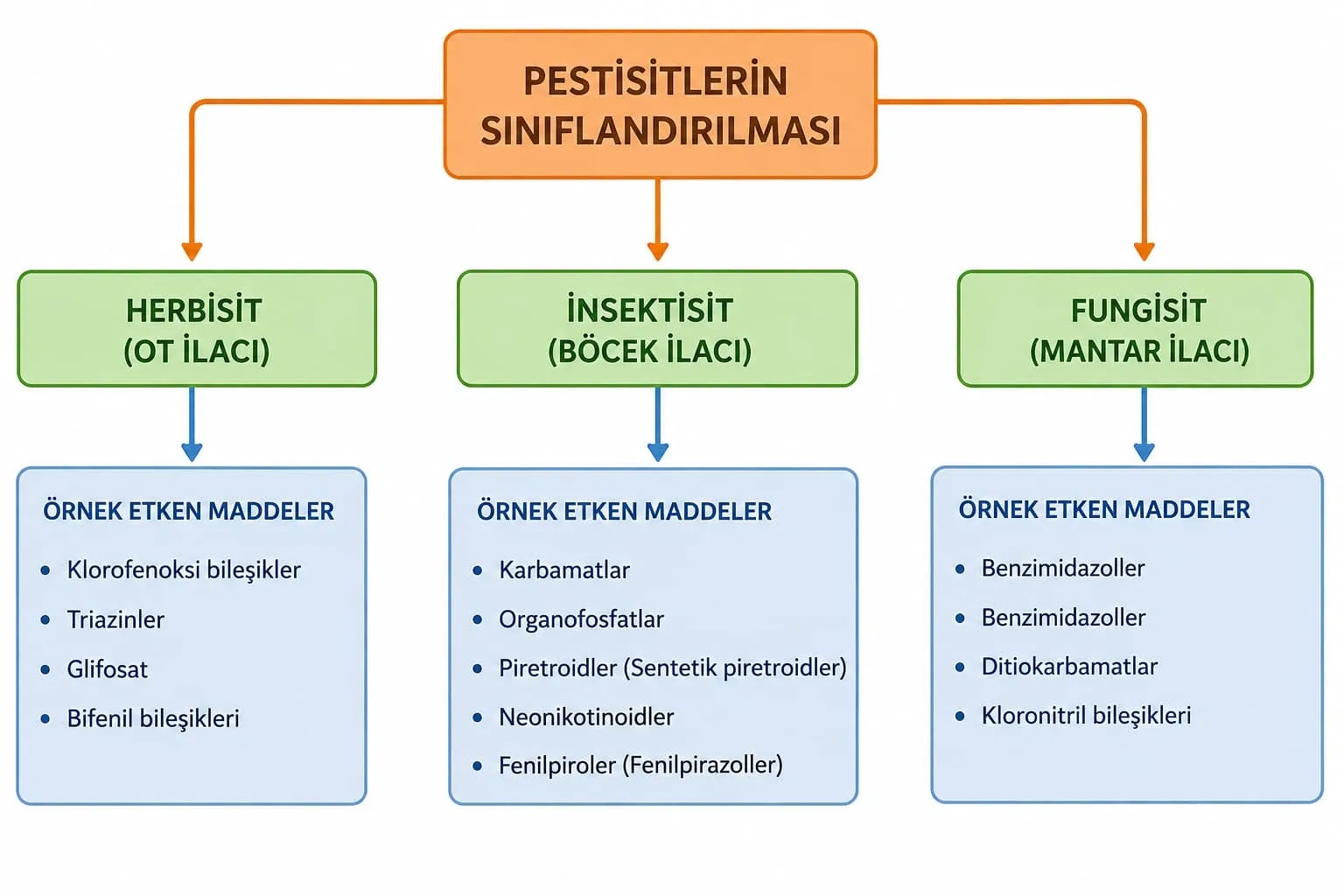
Pesticides fall into three main groups: herbicides (weedkillers), insecticides (insect killers) and fungicides
(fungus killers). They are used to control pests in agricultural production,
but when they do not break down fully in nature, they can leave residues in soil
and water.
What harm do pesticides cause?
High or prolonged exposure can have adverse effects on the nervous system, hormone balance and immune
system. For this reason, pesticide residue levels in both food and drinking water
are monitored regularly and kept under control with legal limit values.
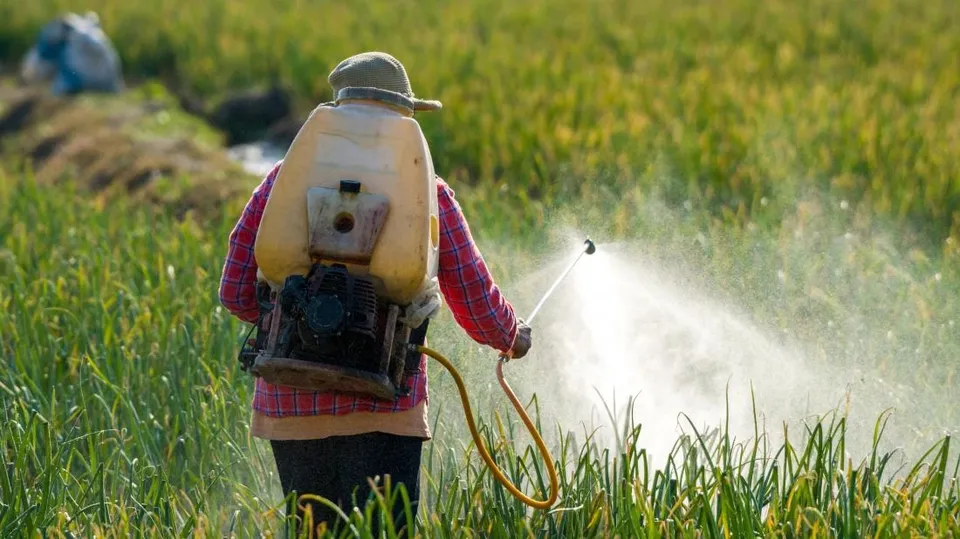
How do pesticides get into drinking water?
Not all of the pesticides used on farmland remain on the plant or in the soil:
● Surface runoff: Runoff after rain and irrigation can carry residues into streams, lakes and
reservoirs.
● Leaching: Over time, they can filter down through the soil layers into groundwater.
While surface runoff after rain and irrigation can carry residues into streams, lakes and reservoirs,
some residues also filter down through the soil layers into groundwater over time. The US Environmental Protection
Agency (EPA) reports that when pesticides do not break down fully in nature, they can be detected at low levels
in water sources. Rural areas that use well water carry a higher risk in this respect, while trace amounts of residue
can also be found in municipal mains water.
Which pesticides dissolve in water?
How pesticides behave in water depends on their chemical structure:
● Those with high water solubility (some herbicides and organophosphate compounds) are more prone
to being carried directly into water sources without binding to the soil.
● Fat-soluble compounds with low water solubility (some older-generation organochlorine pesticides)
bind more to soil and sediment.
This difference determines which purification method will be more effective against which type of pesticide.
How are pesticides removed? Are conventional filters enough?
Washing fruit and vegetables and purifying water are different matters – this article focuses on drinking water. The simple
sediment filters commonly used in homes mainly capture sand, rust and visible particles.
Scientific studies show that simple membrane/microfilters used on their own perform poorly at
removing pesticides. In other words, a sediment filter alone
is not enough to deal with pesticide residues.
How do water purification technologies reduce pesticides?
The methods used in home water purification vary widely in how well they remove
pesticides, so it is important to know what each technology does.
The simple sediment filters commonly used in homes are mainly designed to capture sand, rust and visible
particles. Scientific studies show that simple membrane/microfilters used on their own
perform poorly at removing pesticides; in other words,
a sediment filter alone is not enough to deal with pesticide residues.
To what extent can RO (reverse osmosis) reduce pesticides?
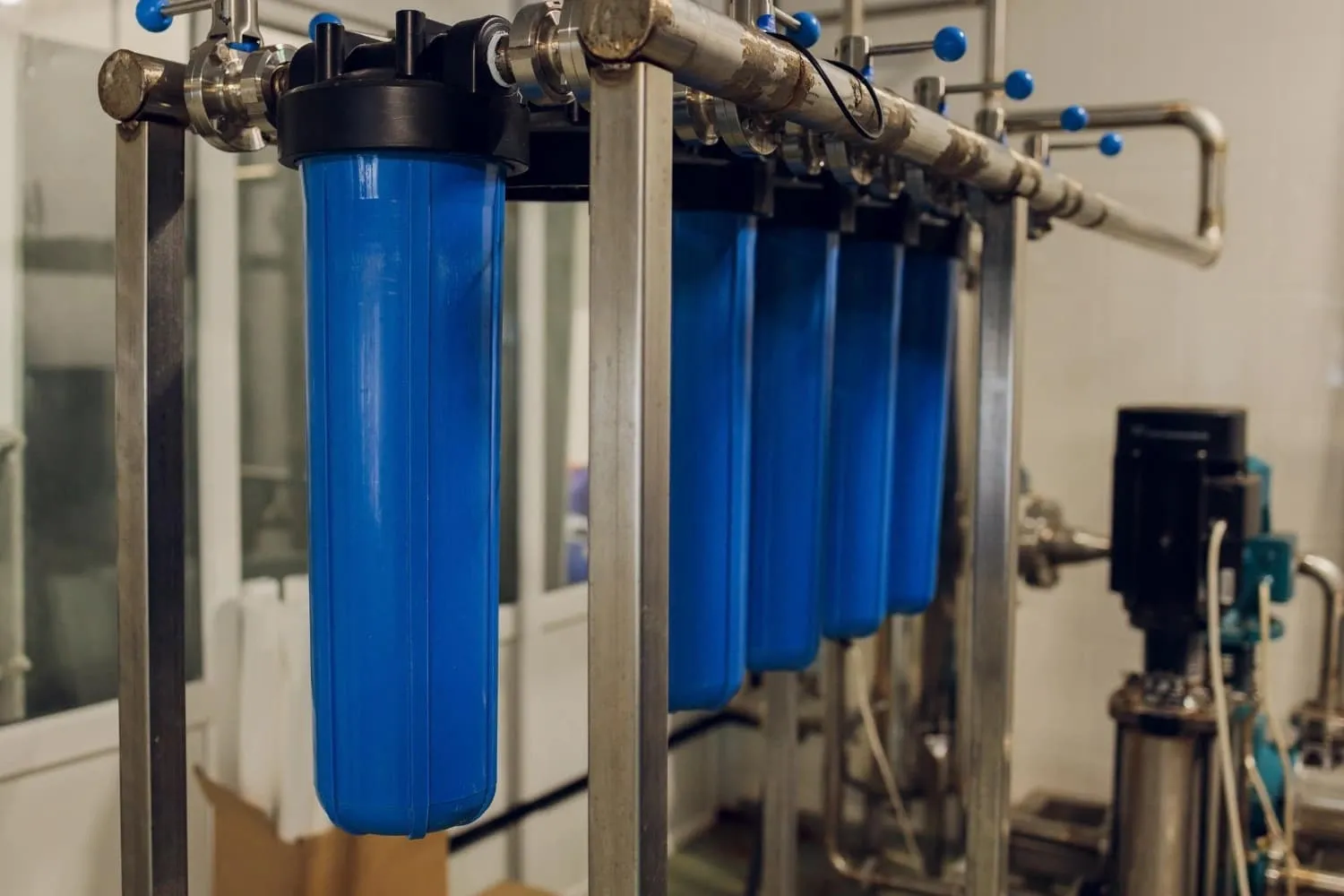
Reverse osmosis is a technology that separates dissolved substances by forcing water through a semi-permeable
membrane at high pressure. Relevant scientific publications:
● A study comparing home water filters reported that activated carbon and reverse osmosis achieved close to
100% removal of the 13 pesticides tested, whereas membrane
filters generally performed poorly.
● Another study testing different RO membranes found removal rates above 95%
for most pesticides.
● Industry sources state that a well-operated RO + activated carbon system can reduce pesticides and herbicides
by 97–99%.
Important note: These rates vary according to the type of pesticide, the type of membrane and how well the system
is maintained. It is not true to say that "RO removes every pesticide at the same rate"; performance is
specific to each compound.
What is the role of activated carbon?
Activated carbon is a filter material whose porous structure adsorbs organic molecules onto its
surface. Scientific assessments show that, for synthetic organic chemicals – including pesticides – activated
carbon is one of the most effective removal methods. In RO systems, the granular activated carbon (GAC) layer used before/after
the membrane both protects the membrane and
helps remove organic residues. However, its effectiveness depends on the type of carbon, the contact time and
how saturated the filter is – a carbon filter that is not replaced on time
can lose much of its performance.
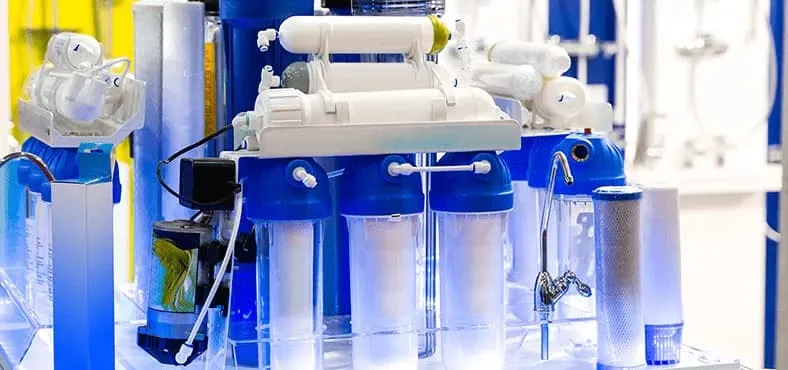
Filtration stages in multi-stage water purifiers
Home water purifiers generally follow this filtration sequence:
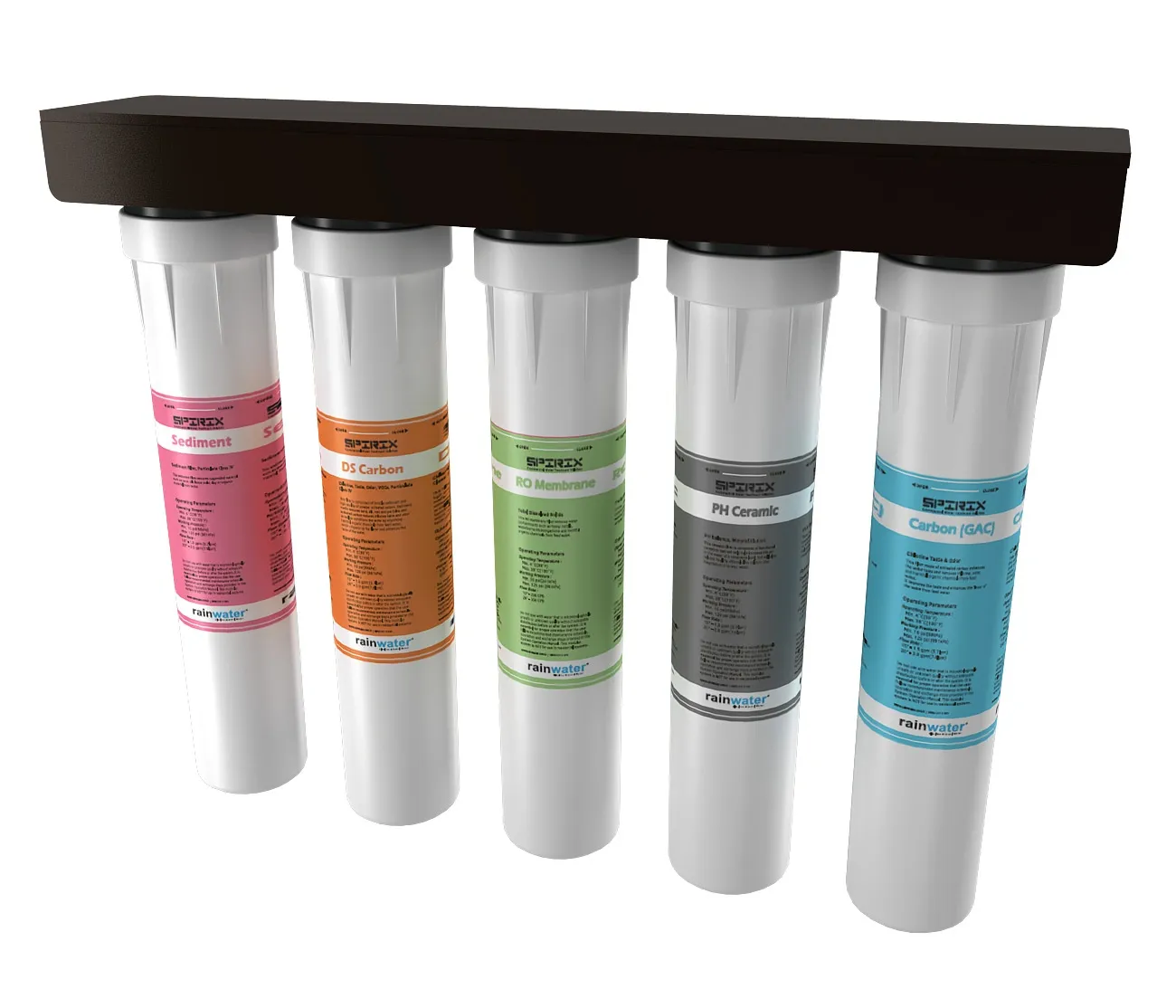
- Pre-filtration (sediment): Captures sand, rust and large particles, protecting the subsequent
stages. - Activated carbon stage: Helps remove chlorine, taste/odour problems and some organic
compounds through adsorption. - RO membrane: Separates most dissolved organic and inorganic substances at the molecular
level. - Final-stage carbon/polishing filter: Prevents loss of taste after storage and gives quality a final
boost.
Findings in the literature show that when these technologies work together in a multi-stage system, they
deliver more consistent results across a wider range of contaminants than methods used on their own.
A typical sequence consists of a pre-filter that captures coarse particles, activated carbon that adsorbs chlorine and organic
compounds, an RO membrane that separates dissolved substances at the molecular level,
and a final-stage filter that preserves taste after storage.
What role do Rainwater water purifiers play
in reducing pesticides?
The DuPont FilmTec reverse osmosis membrane and multi-stage activated carbon filtration used in Rainwater
water purifiers are based on a design principle consistent with the scientific literature summarised above:
pre-filtration to capture coarse particles, activated carbon layers to adsorb organic compounds
and an RO membrane to separate dissolved substances at the molecular level come together in the same
system. Compared with a sediment filter alone, this design offers a more comprehensive approach to purification
against a wide range of contaminants in water.
Rainwater documents its water quality performance across comprehensive parameters such as pH, hardness, nitrate, free
chlorine and mineral content through analysis reports from institutions such as TÜBİTAK BÜTAL, the Turkish Ministry of Health, Düzen Norwest, Hacettepe University, İTÜ and
ODTÜ. This technological foundation is consistent with the RO and activated carbon
principles that stand out for pesticide removal in the scientific literature shared above.
If you suspect pesticide residues in your water source, a dedicated pesticide test carried out by an independent
laboratory is the soundest way to determine the purification solution that best suits your
needs.
References: EPA Pesticide Science and Water Treatment Guidance; ScienceDirect – "Efficiency
of home water filters on pesticide removal from drinking water"; Membranes (MDPI) – "Removal
of Trace Organic Contaminants by RO and GAC"; Environmental Science and Pollution
Research – study on pesticide removal by RO membranes; NCBI – "An Evaluation of Activated Carbon
for Drinking Water Treatment".