Which Water Purifier Should I Buy? Buying Guide by Household Size and Water Hardness
Would you like to listen to this article?
Your browser reads the article aloud.
0:00 total 9:15
Summarise this article with AI:
Once you decide to buy a water purifier, dozens of models, technologies and stage counts appear. Making the right choice starts with clarifying your own needs. There is no single answer to which water purifier should I buy: household size, water hardness, kitchen layout and budget decide it. In this guide we work through the choice step by step, using measurable criteria.
Key points
- A good choice rests on three things: household size and daily water need, your water's hardness and TDS, and the installation space in your kitchen.
- Capacity matters more than the number of filter stages; a device with more stages is not automatically a better fit.
- Beyond the purchase price, consider filter replacement cost, service network and warranty terms.
- For a precise choice, have your water analysed; this article offers general guidance.
Questions to Ask Before You Choose a Water Purifier
Before looking at models, answer these questions clearly:
- How many people live in your home, and roughly how much drinking and cooking water do you use each day?
- Is your water hard? Do you see limescale in the kettle and on taps?
- Is there enough free space under your sink for the device?
- Are you a tenant, or can you make permanent changes to the plumbing?
- Do you only want better drinking water, or do you also want to tackle limescale across the home?
How to Choose Capacity by Household Size
In home systems, two things set capacity: the membrane's daily output and the volume of the pressurised storage tank. Home membranes are generally designed to produce roughly 190 to 380 litres a day (50-100 GPD), while the tank makes sure water flows quickly when you open the tap.
The table below is a general guide; for exact capacity, check the manufacturer's specification.
| Household size | General need | Suggested choice |
|---|---|---|
| 1-2 people | Low consumption | A standard home under-counter system is enough |
| 3-5 people | Medium consumption | A mid-capacity membrane and a larger tank are preferable |
| 6+ people, home office | High consumption | A high-capacity system or a purified water dispenser can be considered |
Which System Do You Need for Your Water Hardness?
Water hardness directly affects your choice. Hard water wears out membranes and filters faster and can shorten the life of the device. If you live in a hard-water area, it makes sense to consider a softening solution before the purifier.
- Soft to moderately hard water: a standard multi-stage under-counter system is usually enough.
- Hard to very hard water: adding a water softener before the purifier helps protect the membrane. We explain the principle in our articles on ion exchange and softening resin.
Key Differences Between Device Types
These are the comparisons buyers make most often.
Under-Counter or Countertop?
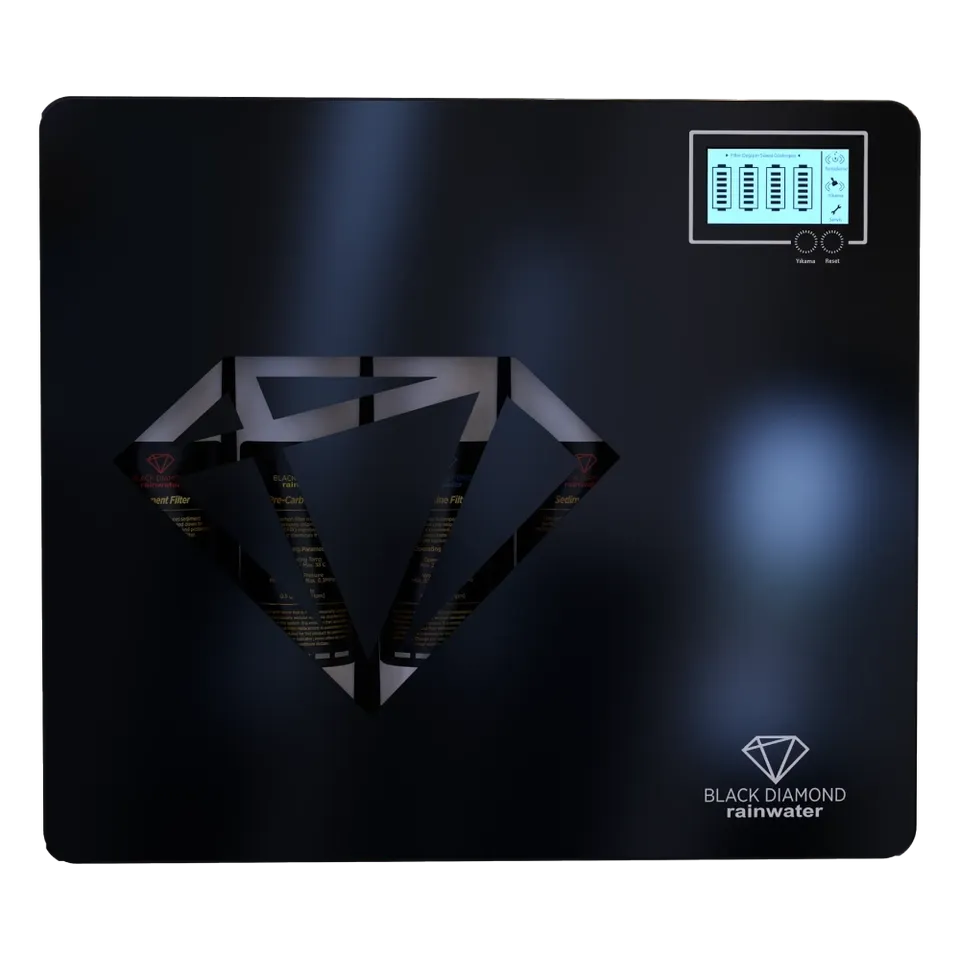
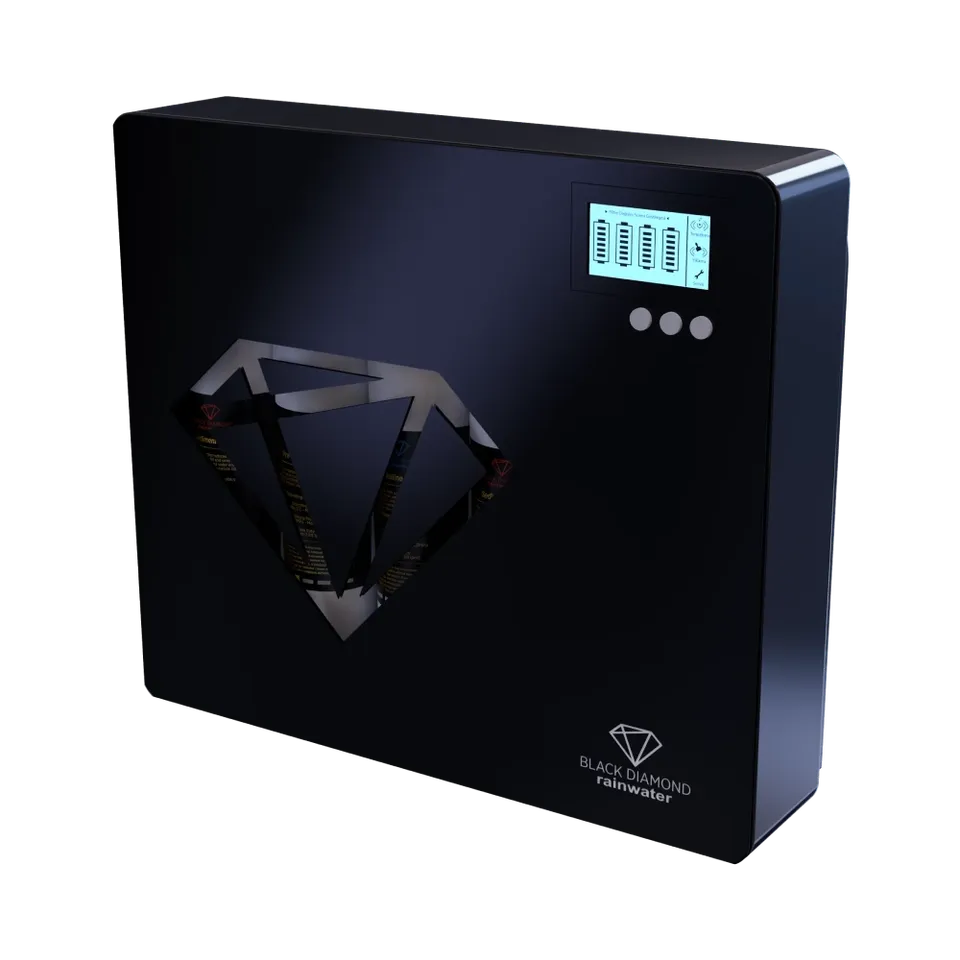
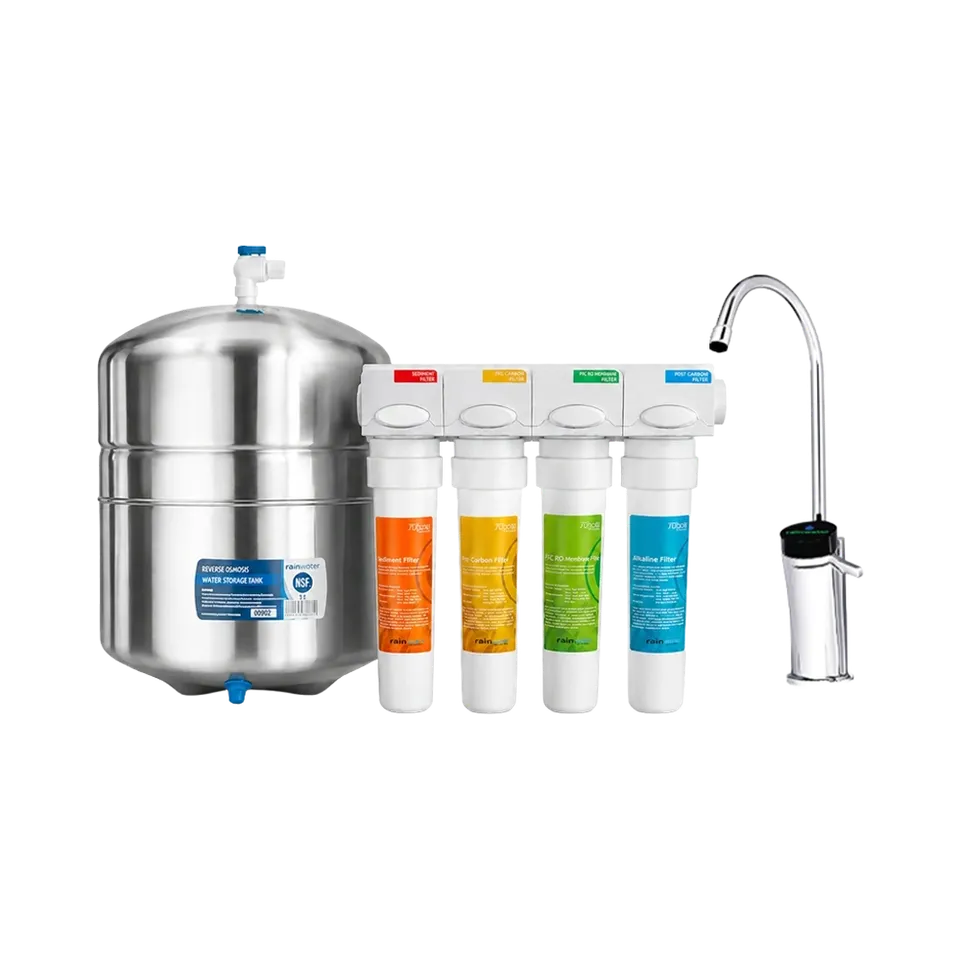
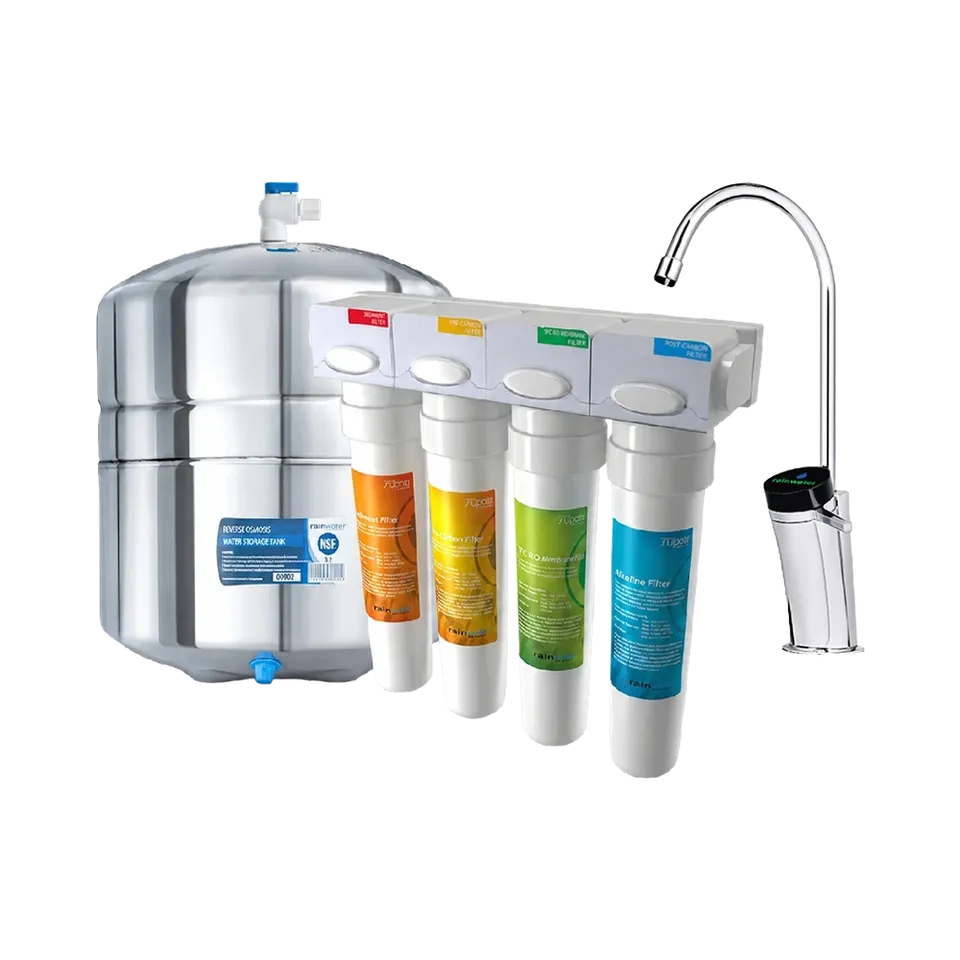
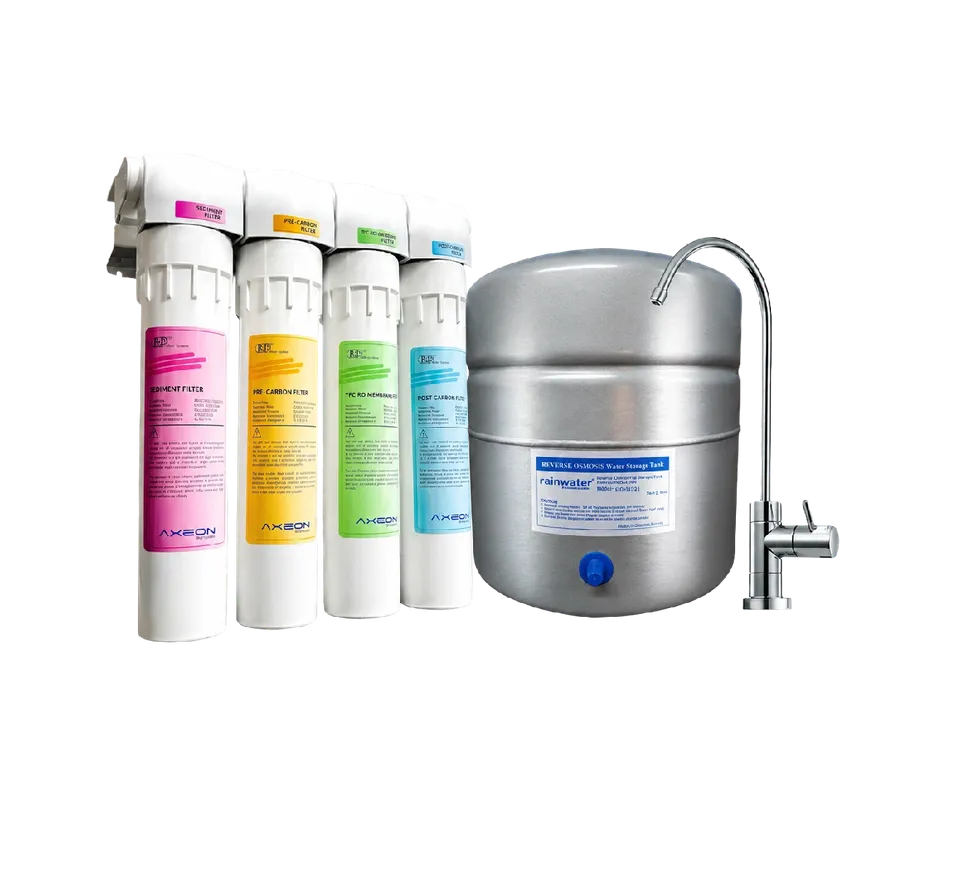
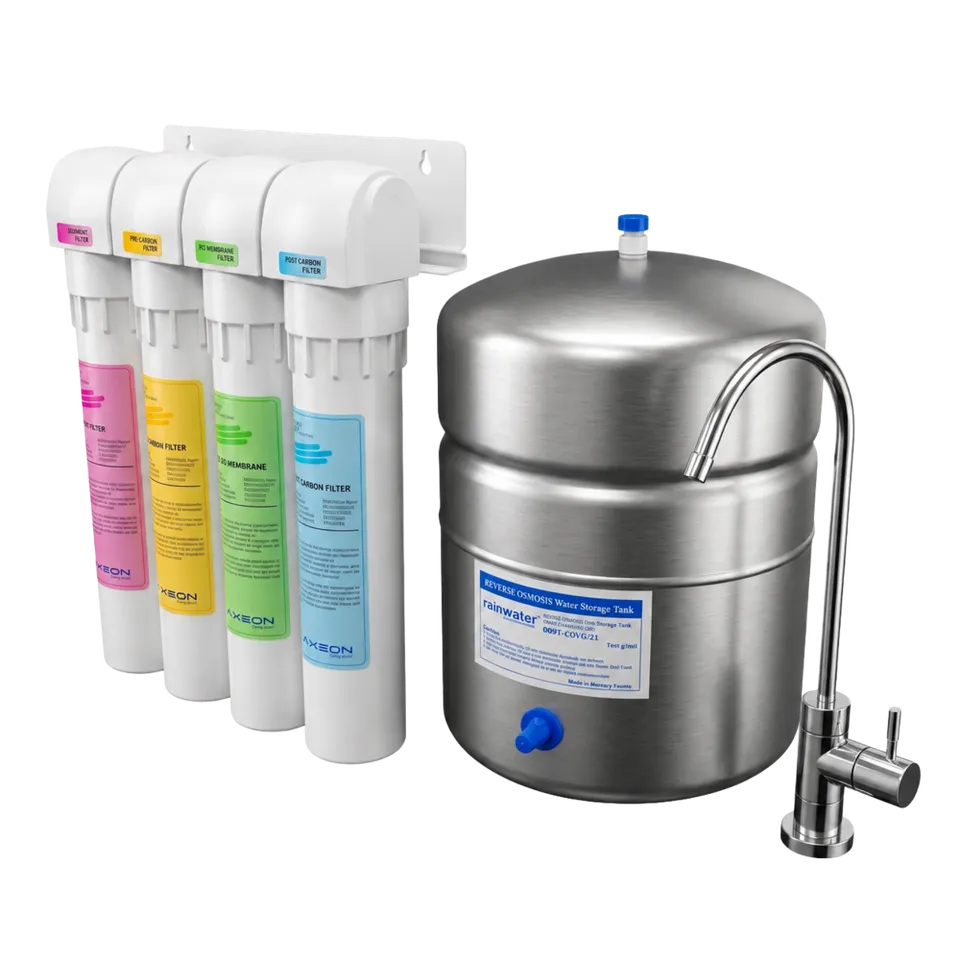
Under-counter units sit in the cupboard below the sink, take no worktop space and usually dispense through a separate tap. Countertop units sit on the worktop and are simpler to install. If you want a permanent solution, under-counter water purifiers are the suitable category.
With a Pump or Without?
Pump-assisted systems give the membrane the pressure it needs in homes with low mains pressure. Pump-free systems rely on mains pressure and offer a simpler, lower-energy solution when pressure is sufficient.
With a Tank or Tankless?
Tank systems store purified water and deliver fast flow when the tap is opened. Tankless systems purify on demand and save space.
Filter Stages and Technology: How Many Stages Are Enough?
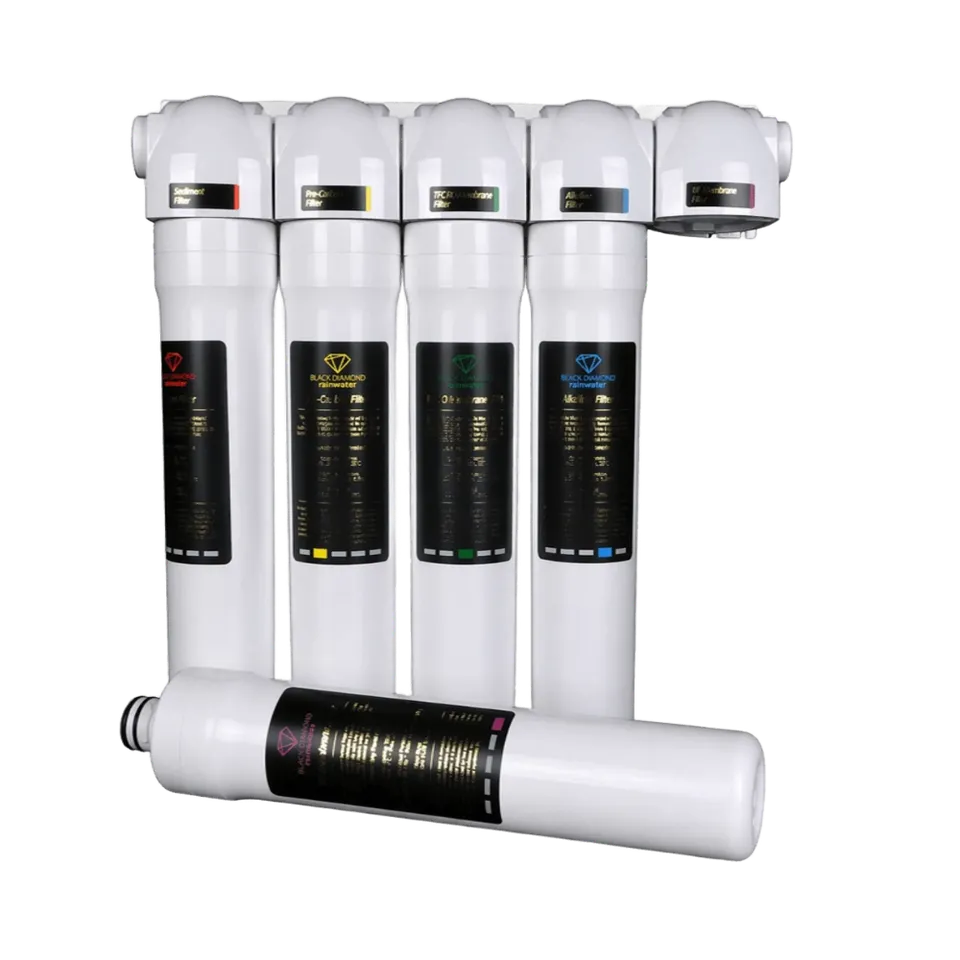
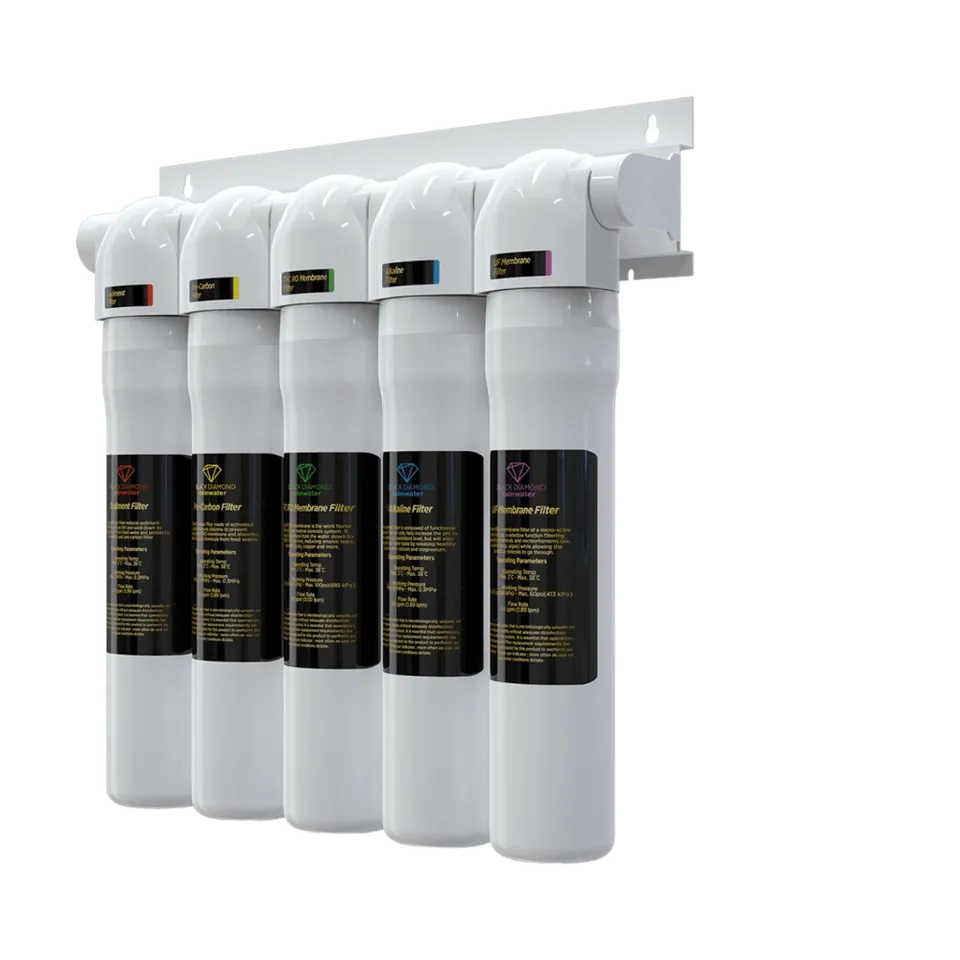
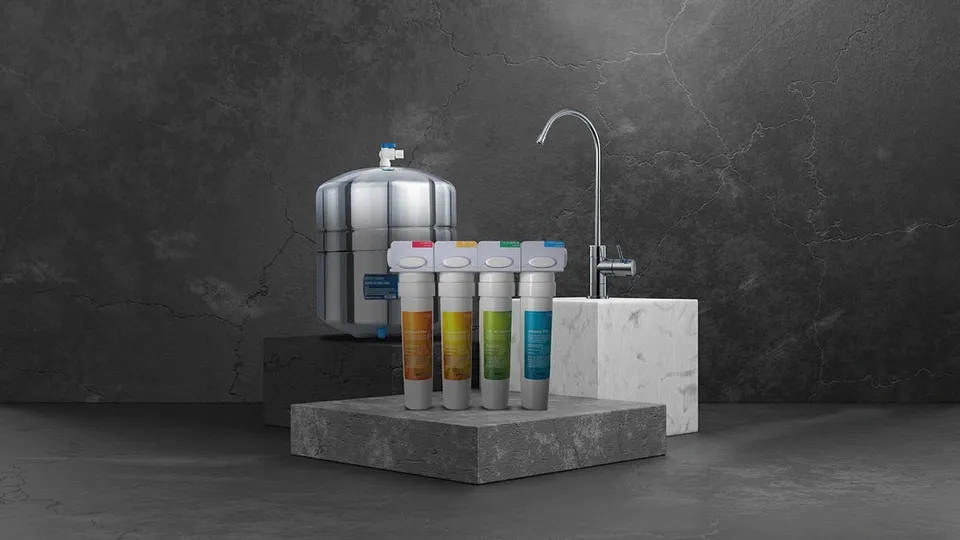
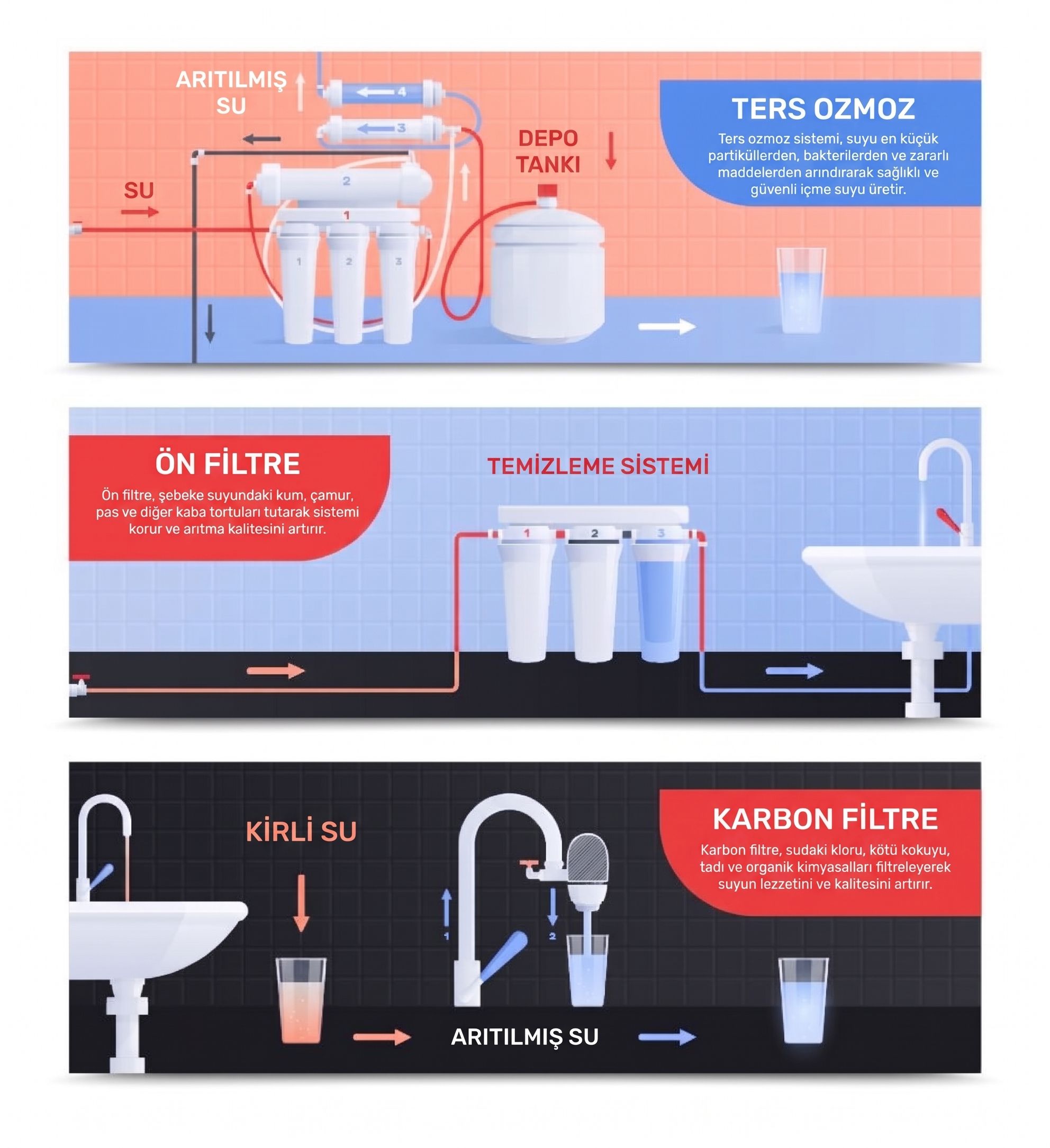
The number of stages on its own is not a quality indicator. What matters is that each stage has a job that matches a problem in your water. In most multi-stage systems the order is sediment, carbon, reverse osmosis membrane and finally a taste or mineral stage. For added protection, UV filters can also be considered. You can browse stage-specific water purifier filters as well.
Reverse Osmosis, Ultrafiltration or Mineral Options: How to Decide
Technology choice depends on what you expect from your water. If you want to cut dissolved matter in drinking water as far as possible, a reverse osmosis system suits you. If you want to preserve the mineral structure and only hold back particles and microorganisms, ultrafiltration can be an alternative; read what is ultrafiltration for detail. For people who find reverse osmosis water flat in taste, systems that add minerals at the last stage are common. If you want extra microbiological assurance, a UV stage can be added.
Kitchen Layout and Installation Space
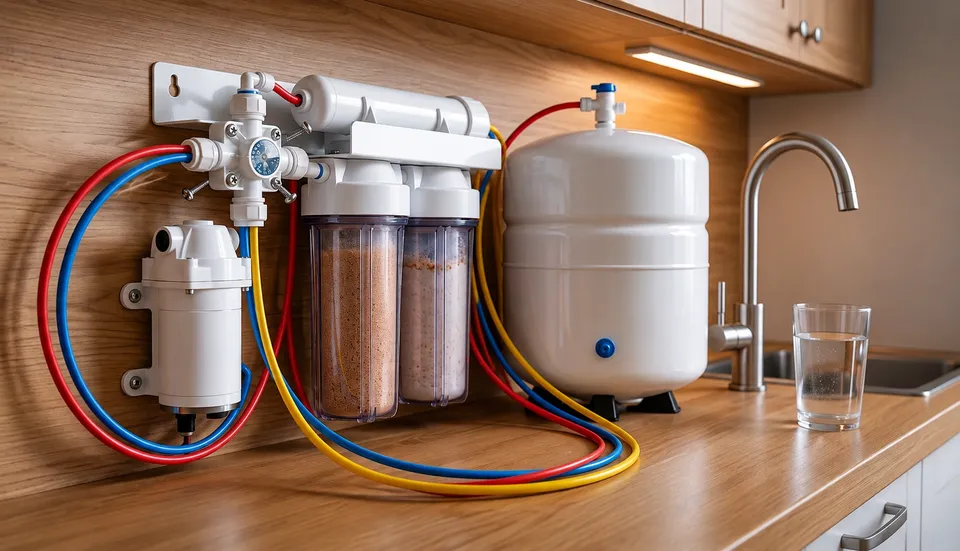
Beyond technical features, the physical layout of your kitchen affects the choice. The interior volume of the under-sink cupboard, the position of the trap, pipes and items such as a waste bin all reduce the space available. Under-counter systems usually have several components, including filter housings, a membrane and a tank, and all of them must fit. Leaving extra room beneath and in front of the housings makes filter changes easier.
If there is not enough space under the sink, you can place the device in another cupboard and extend the tubing, but the longer the line, the greater the risk of leaks and pressure loss. In such cases a countertop unit or a dispenser can be more practical. For installation details see our guide on how to install a water purifier.
Hidden Costs When Choosing a Water Purifier
The purchase price is only part of the total cost. Consider also:
1. Filter and membrane replacement cost and frequency
2. Wastewater ratio: reverse osmosis systems produce wastewater, and more efficient models waste less.
3. Warranty period and service network
4. Installation cost: some manufacturers offer installation free of charge.
5. Electricity use: pump-assisted systems consume some energy, even if little.
Common Mistakes When Buying a Water Purifier
The most frequent mistake is looking only at price or stage count. A device with many stages that does not suit your water's problem simply adds cost. Another is buying without considering water hardness, since hard water can wear out a membrane quickly. The third is not asking about filter replacement cost and how easily filters can be obtained. The fourth is choosing capacity without reference to household size. You can avoid these mistakes by reading types of water purifiers first.
Service, Warranty and Certification Checks
A water purifier is not something you buy once and forget; over the years it needs filter and membrane changes, periodic maintenance and sometimes service support. So before you buy, check that the service network is wide, that filters are easy to obtain and what the warranty covers. Materials in contact with water should be food-grade and certified. Rainwater products come with a 2+8 year warranty and 24/7 technical support; you can ask for details through our contact page.
A Quick Decision Guide
All of these criteria can be reduced to a quick summary that helps you find the option closest to your situation.
- If you only want better drinking water: a multi-stage under-counter system.
- If you also have a limescale problem: a whole-house softening system together with an under-counter purifier.
- If you cannot modify the plumbing: a countertop device, a dispenser or a tap filter.
- For heavy use or an office: a purified water dispenser.
Let Us Help You Choose
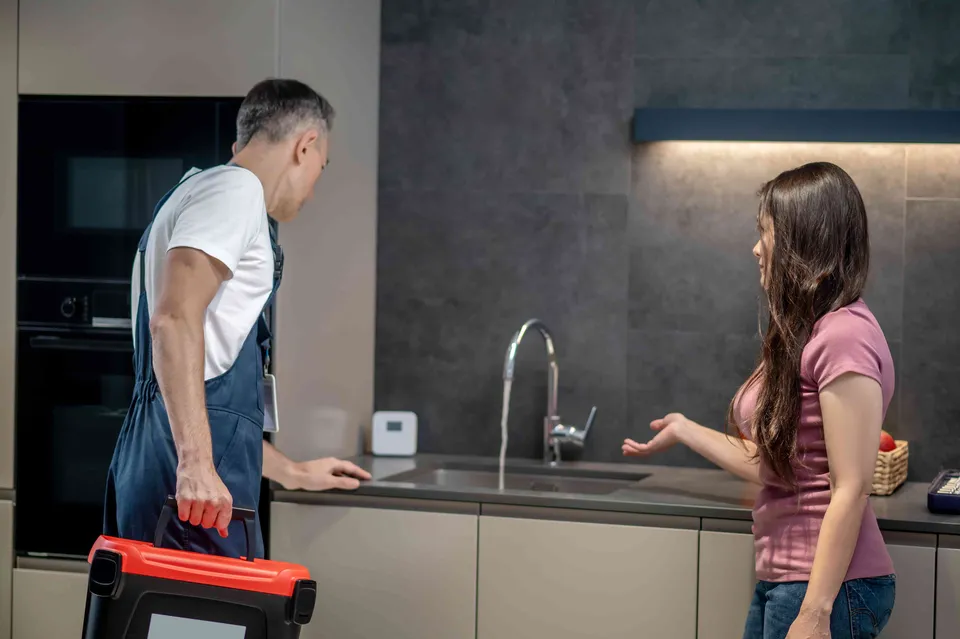
If you are still undecided, Rainwater specialists can assess your household size and your water and recommend a suitable system. You can see the options in the water purifiers category or contact us.
Frequently Asked Questions
Here are short, direct answers to the questions readers ask most often about this topic.
Which water purifier is best for a home?
It depends on water consumption, hardness and kitchen layout. For most homes, a multi-stage under-counter reverse osmosis system is a balanced choice. If you also have a hard-water problem, consider it together with a softening solution.
What capacity of water purifier should I buy?
You need a membrane and tank volume that match your daily drinking and cooking water use. Standard devices suit one or two people, while larger households may consider a higher-capacity system or a purified water dispenser.
What should I check when buying a water purifier?
Look at capacity, what each filter stage does, filter replacement cost, wastewater ratio, warranty and service network. Certified materials are also an important criterion.
Do I need a water analysis before buying a purifier?
It is not compulsory but strongly recommended. Knowing your hardness, TDS and possible contaminants reduces the risk of buying a device that is too much or too little.
Should I buy an under-counter or a countertop purifier?
If you can install permanently and want to keep the worktop free, under-counter is the better fit. If you value easy installation and portability, countertop is the better fit.