Coffee Machine Descaler: How to Use It and How to Prevent Limescale
Would you like to listen to this article?
Your browser reads the article aloud.
0:00 total 17:08
Summarise this article with AI:
If you have noticed that the coffee from your machine is not as hot as it used to be, that brewing takes longer, or that the taste has changed in a way you cannot quite put your finger on, the culprit is most likely limescale building up inside the machine. A coffee machine descaler is the best-known way to remove this build-up; however, which product to use, how to carry out the process and how often to repeat it depend on the type of machine and the water you use. In this article we look at the descaler options, step-by-step cleaning and, particularly for cafés and restaurants, how limescale can be prevented before it forms.
Key points
- Limescale is an alkaline mineral deposit that can only be dissolved with acid; hot water or bicarbonate of soda will not remove it.
- For espresso and bean-to-cup machines, the descaler recommended by the manufacturer should be used; vinegar can damage seals and parts in some models.
- How often you need to descale is determined not by the calendar but by the hardness of the water and the amount of water passing through the machine.
- In cafés and restaurants, the lasting solution is to filter the water going into the machine and bring it to the right mineral balance for coffee.
Short Answer: What Does a Coffee Machine Descaler Do?
A coffee machine descaler is a maintenance product that uses an acidic solution to dissolve the calcium and magnesium deposits that build up in the machine's heater, boiler and water channels, and flush them out of the system. Ready-made liquid or tablet descalers, citric acid and, in some machines, diluted vinegar are used for this purpose. A descaler removes limescale that has already built up but does not stop new scale from forming; the way to reduce limescale for good is to control the hardness of the water going into the machine with a filter.
Why Does Limescale Form in a Coffee Machine?
Mains water contains invisible amounts of dissolved calcium and magnesium bicarbonate. When the water is heated, these minerals can no longer stay dissolved; they turn into calcium carbonate and stick to the hottest surfaces, namely the heating element, the boiler walls and the narrow water channels. With every brew this layer gets a little thicker, which is why limescale becomes noticeable not in a day but over weeks and months.
The most important factor determining how quickly limescale forms is water hardness. In areas with hard water, the same machine scales up much faster than in an area with soft water. Mains water in many Turkish cities is moderately hard to hard; you can check the situation in your area on our water hardness map and, for a more precise result, take a look at methods for measuring water hardness.
Limescale causes two main problems in a machine. First, it forms an insulating layer on the heater; the machine has to run longer and use more energy to reach the same temperature. Second, it narrows the water channels; flow slows down, pressure becomes uneven and the pump is put under strain. If neglected, this can lead to heating element, thermostat and valve failures.
How Can You Tell Your Coffee Machine Has Scaled Up?
Scaling usually creeps up gradually and the first signs are easy to miss. The most commonly noticed sign is a longer brewing time: the same amount of coffee starts to take noticeably longer to fill, and on an espresso machine the shot time and flow change. This is often accompanied by lukewarm coffee, because a scale-coated heater struggles to bring the water up to the target temperature.
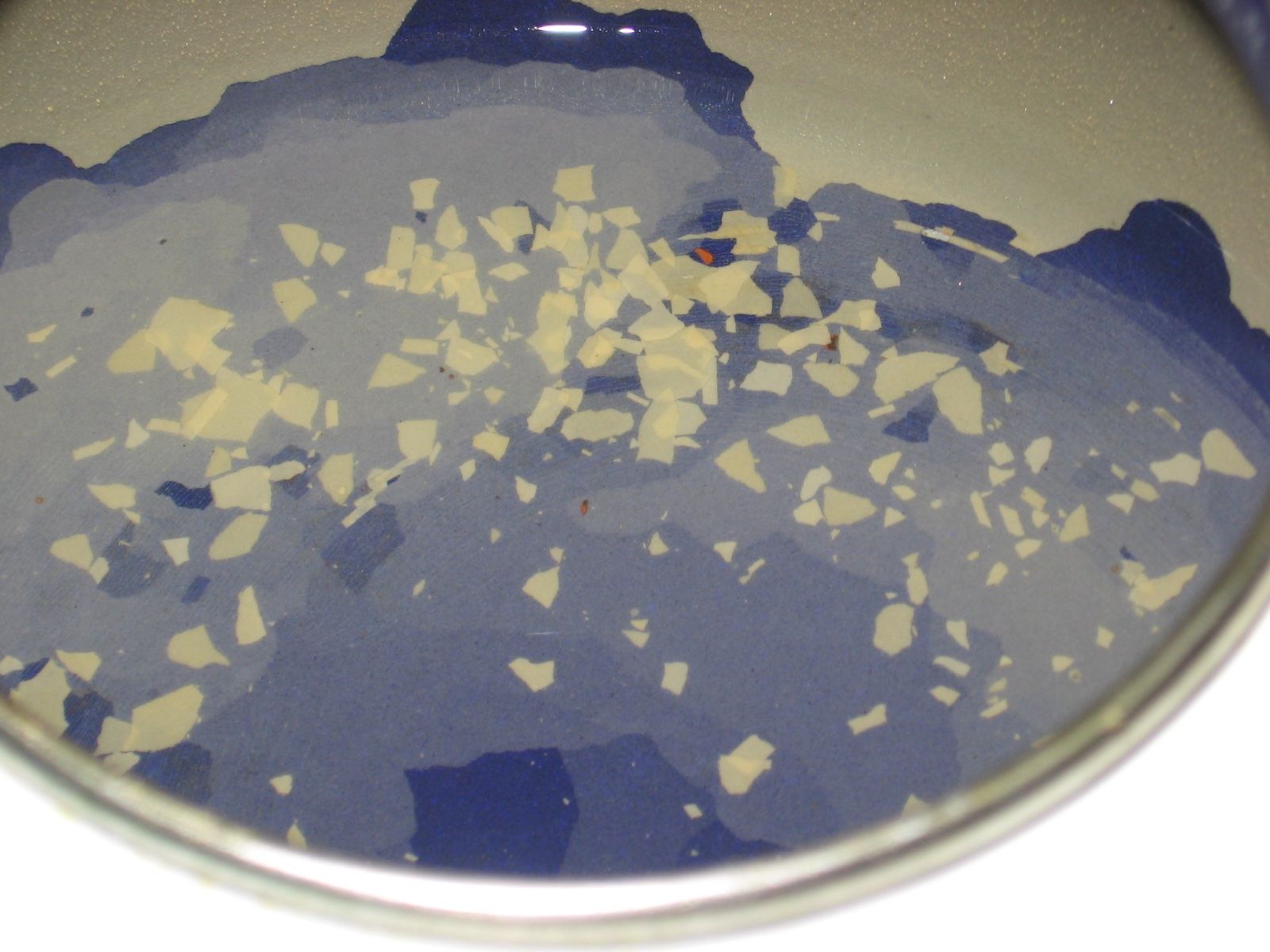
A change in taste is another important clue. Water that is not hot enough cannot fully extract the aromas in the coffee, and the coffee may taste sour, thin or unexpectedly bitter. Hissing, gurgling or straining noises from the machine, and white, chalky marks in the water tank and on the brew head, are also physical signs of scaling. Many modern espresso machines also have a "descale" warning light; this light usually comes on based not on time but on the amount of water that has passed through the machine.
What Types of Coffee Machine Descaler Are There?
Because limescale is alkaline, it can only be dissolved by an acidic substance. The options on the market fall into three main groups, and the differences between them come down to how gentle they are on the machine, how much odour they leave behind and how much rinsing they require. The table below shows these three options side by side.
| Descaler | Ratio | Advantage | Points to watch |
|---|---|---|---|
| Ready-made descaler (liquid/tablet) | Ratio on the packaging | Formulated for machines, leaves no odour | Choose the product recommended by the manufacturer to protect the warranty |
| Citric acid | 1–2 tablespoons per 1 litre of warm water | Cheap, food-grade, odourless | Can block channels if not fully dissolved |
| White vinegar | 1 part vinegar + 1 part water | Found in every home | Leaves an odour, needs a lot of rinsing, not suitable for some machines |
Ready-Made Descalers
Ready-made descalers are usually based on lactic acid, citric acid or sulphamic acid and are formulated so as not to damage the seals, hoses and metal parts of coffee machines. Especially with espresso and bean-to-cup machines, using the product recommended by the manufacturer is the safest option, both for the life of the appliance and for the warranty terms. The main advantages of these products are that they leave no odour and work in step with the machine's own descaling programme.
Citric Acid
As a food-grade acid, citric acid is the most common alternative used at home. Unlike vinegar it is odourless and needs less rinsing, making it a very practical option for filter coffee machines and kettles. The thing to watch is that the crystals are completely dissolved in the water; undissolved particles can block the narrow water channels. We have explained in a separate article how the same method is used to descale a kettle.
White Vinegar
White vinegar dissolves limescale thanks to the acetic acid it contains, which is why it has long been used as a home remedy. However, vinegar leaves a distinct odour and a large number of rinses are needed to flush it out of the machine completely. Many espresso and bean-to-cup machine manufacturers advise against vinegar on the grounds that it can damage the seals and some metal parts; it is therefore better to use vinegar only in simple filter coffee machines where the user manual allows it.
How Do You Descale a Coffee Machine?
The principle of descaling is the same for every machine: the acidic solution is passed along the path the water takes, left for a while to dissolve the limescale, and then the system is rinsed thoroughly with clean water. If your machine has a descaling programme, always use it; if not, you can follow the general steps below.
- Empty the water tank, remove the coffee grounds and the filter; if there is a water filter in the tank, take that out too.
- Prepare the descaler in the tank at the ratio given on the packaging or in the table above.
- Start the descaling programme or a normal brewing cycle and run half of the solution through.
- Switch the machine off and wait 20–30 minutes; the acid dissolves the limescale during this time.
- Run the rest of the solution through, discard the collected water and wash the tank.
- Fill the tank with clean water and rinse with at least two or three full cycles; on an espresso machine, run water through the steam wand as well.
The rinsing stage is the most neglected yet most important part of the process. Acid left in the system both spoils the taste of the coffee and can wear out machine parts in the long run. If you have used vinegar, you need to keep rinsing until the smell has completely gone.
Does Descaling Differ by Machine Type?
Although the basic principle is the same, each type of machine has different sensitive points. Choosing the right method ensures both that the cleaning is effective and that the machine is not damaged.
Filter Coffee Machines
Filter coffee machines are the simplest in design, and limescale usually collects in the heating tube. Citric acid, or diluted vinegar where the manual allows it, can safely be used in these machines. Placing an empty paper filter in the filter basket while running the solution through stops flakes of limescale from falling into the jug.
Espresso and Bean-to-Cup Machines
In espresso machines, water passes at high pressure through narrow channels, so limescale is a far more critical problem. Only the descaler recommended by the manufacturer and the machine's own descaling programme should be used in these machines. In bean-to-cup machines, the water filter in the tank must be removed during descaling and the machine must not be switched off until the programme has finished.
Turkish Coffee and Capsule Machines
In Turkish coffee machines with a water tank, limescale builds up particularly on the heating base and at the water passage points; these machines should also be descaled periodically with a descaler prepared at the ratio given in the manual. Most capsule machines have a separate descaling mode, and the warning light usually comes on after a certain number of uses. In both cases, the most accurate information is in the user manual.
How Often Should a Coffee Machine Be Descaled?
Two things determine how often you need to descale: the hardness of the water you use and how much water passes through the machine each day. The same machine can run trouble-free for months on soft water, yet show signs of scaling within a few weeks on hard water. Below is a practical guide for home machines.
| Water used | Approximate hardness | Recommended descaling frequency |
|---|---|---|
| Hard mains water or well water | Above 30 °fH | Once a month |
| Moderately hard mains water | 15–30 °fH | Every two months |
| Softened or filtered water | Below 15 °fH | Every three to four months |
This table is a starting point; if your machine's manual specifies a different interval or number of uses, that takes precedence. If a lot of coffee is brewed each day, setting a regular schedule rather than waiting for the warning light helps maintain the machine's performance.
The Limescale Problem in Professional Machines in Cafés and Restaurants
While a home machine makes a few cups of coffee a day, a two-group espresso machine in a café stays hot all day and heats dozens of litres of water every day. This is why limescale builds up much faster in professional machines, and its impact is not limited to a single cup of coffee. A machine that loses pressure or stops working at peak time means lost sales and customers kept waiting.
In professional machines, the heating element, solenoid valve, flow restrictor and level sensor are the parts most sensitive to limescale. Failure of these parts due to limescale usually requires a service engineer and can put the machine out of action for some time. What is more, many professional machine manufacturers advise against putting acidic solution into the boiler other than by an authorised service centre; in other words, "running a descaler through once a month" as with home machines is not a practical solution for professional machines.
Limescale also undermines flavour consistency. Even with the same beans, the same grind and the same barista, variable water quality results in a different espresso every day. That is why, in cafés and restaurants, the real question should not be "how do I remove limescale" but "how do I stop limescale before it gets into the machine".
Prevent Limescale Rather Than Remove It: What Is the Ideal Water for Coffee?
The way to reduce limescale for good is to control the hardness and chlorine of the water going into the machine. However, the aim here is not to make the water completely pure; the water needs to contain a certain amount of minerals to bring out the coffee's aroma. The Specialty Coffee Association (SCA) publishes target values for coffee brewing water that are used as an international reference.
| Parameter | SCA target value | Acceptable range |
|---|---|---|
| TDS (total dissolved solids) | 150 mg/L | 75–250 mg/L |
| Calcium hardness (CaCO₃) | 68 mg/L | 17–85 mg/L |
| Total alkalinity | Around 40 mg/L | 40–75 mg/L |
| pH | 7.0 | 6.5–7.5 |
| Chlorine | 0 | — |
Source: ASC – SCAA coffee water standards, Coffee Parts – SCA water standards
These values reveal two important facts. Hard water, that is, water high in TDS and calcium, both causes limescale in the machine and gives the coffee an overly bitter, flat taste. On the other hand, fully demineralised pure water is not suitable for coffee either; the coffee turns out thin and sharply sour, and very soft water carries a risk of corrosion to the machine's metal parts in the long term. The right solution is to tailor the water to coffee: chlorine and sediment are removed, hardness is reduced in a controlled way, and the minerals needed for flavour are retained. We have looked in detail at the effect of purified water on the taste of tea and coffee in a separate article.
How to Choose a Water Filter for Professional Coffee Machines
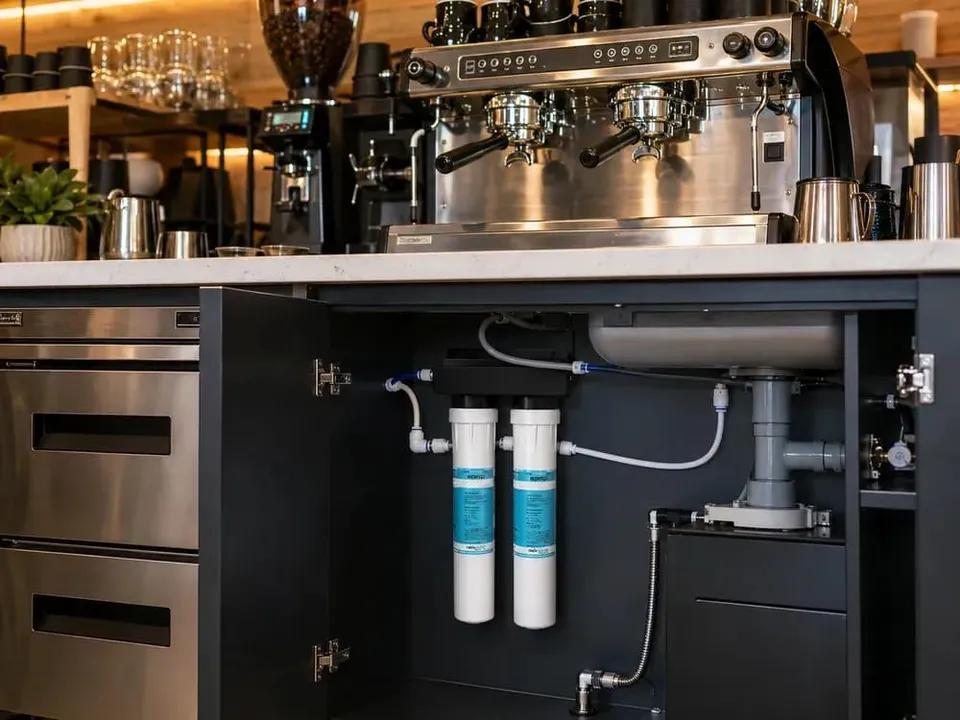
When choosing a filter for a professional coffee machine, you need to answer three questions: how hard is the water, how much water passes through the machine each day, and does the filter preserve the coffee's mineral balance? Hardness and TDS determine the filter technology, while daily consumption determines the cartridge capacity. A filter chosen without this information will either run out early or treat the water too aggressively for coffee.
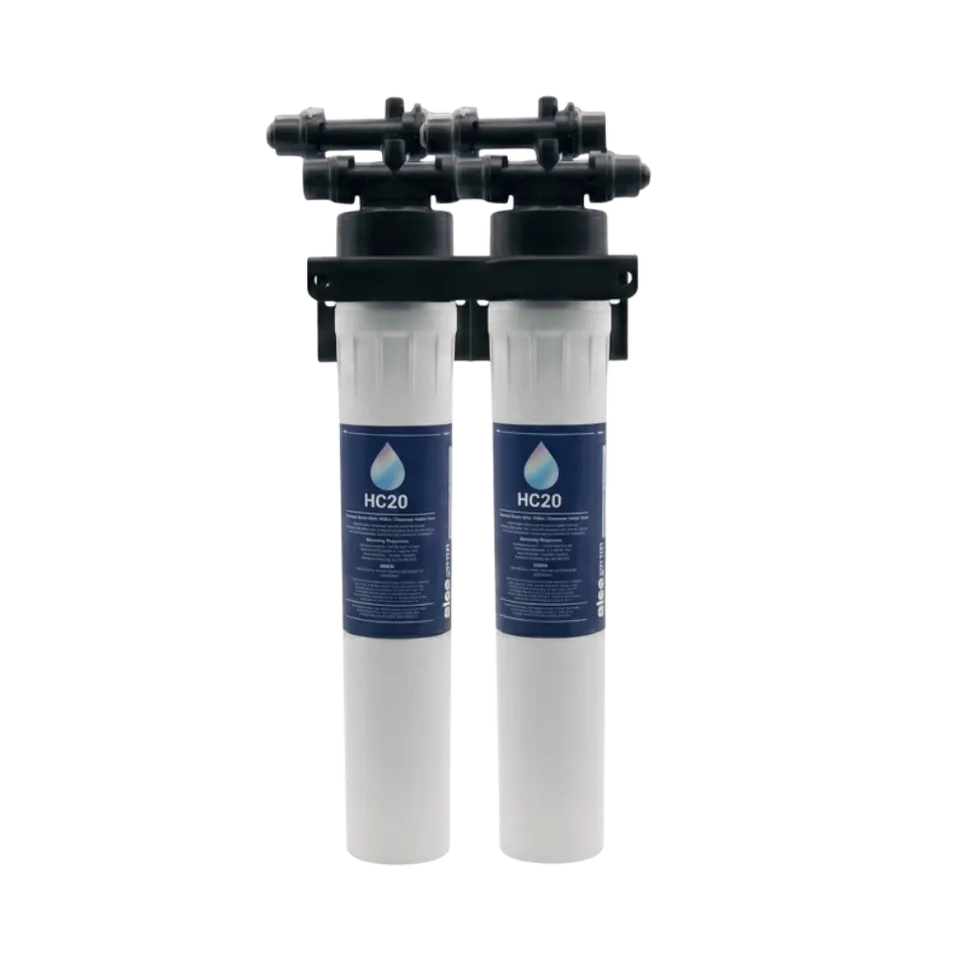
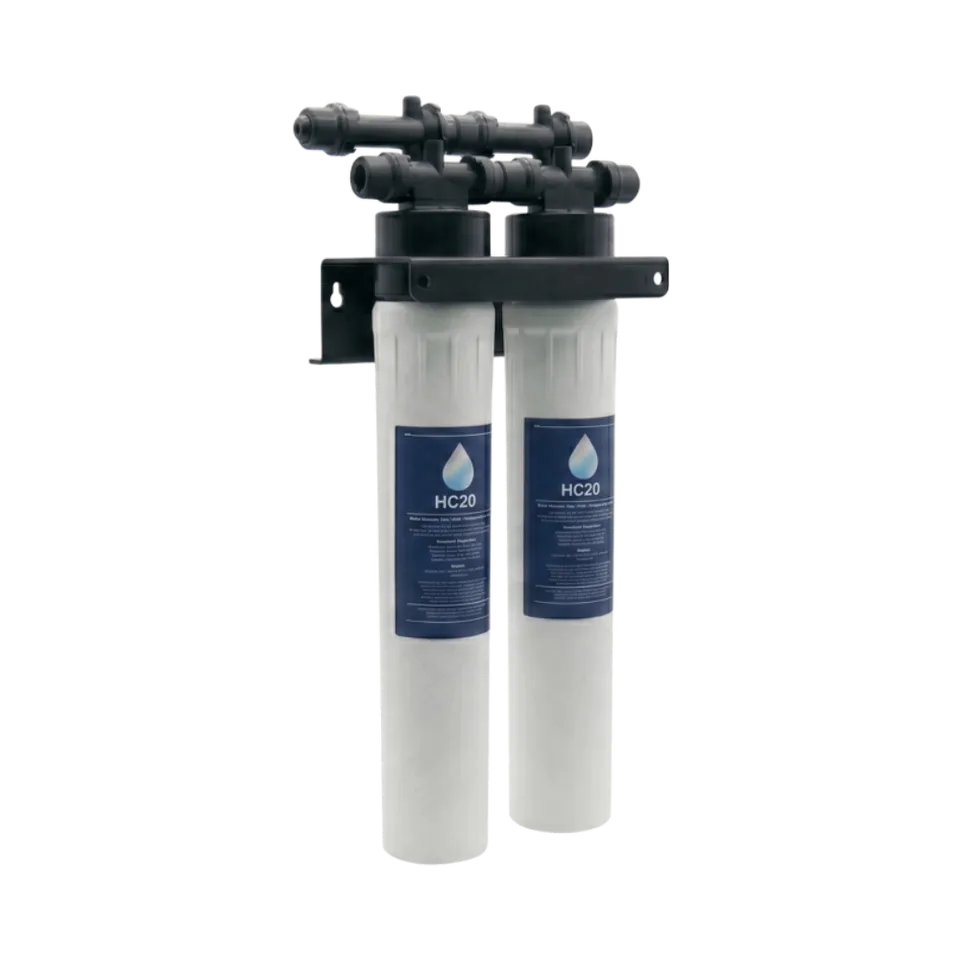
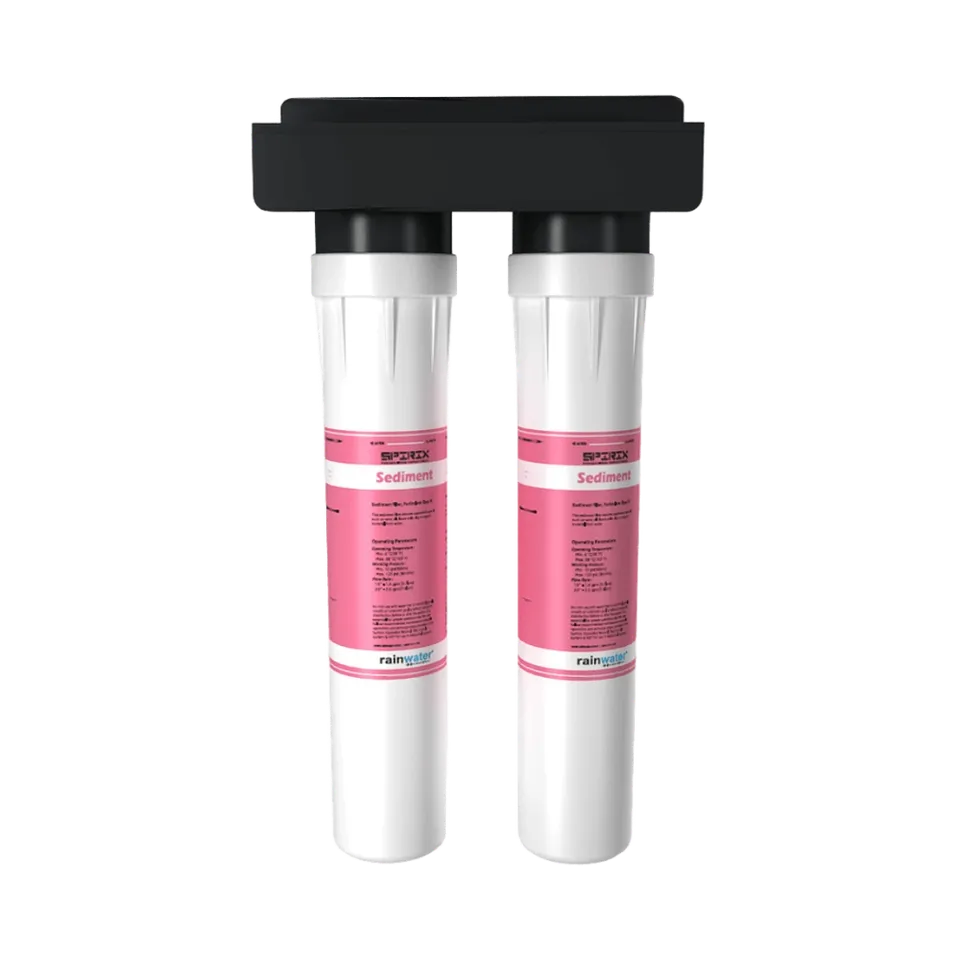
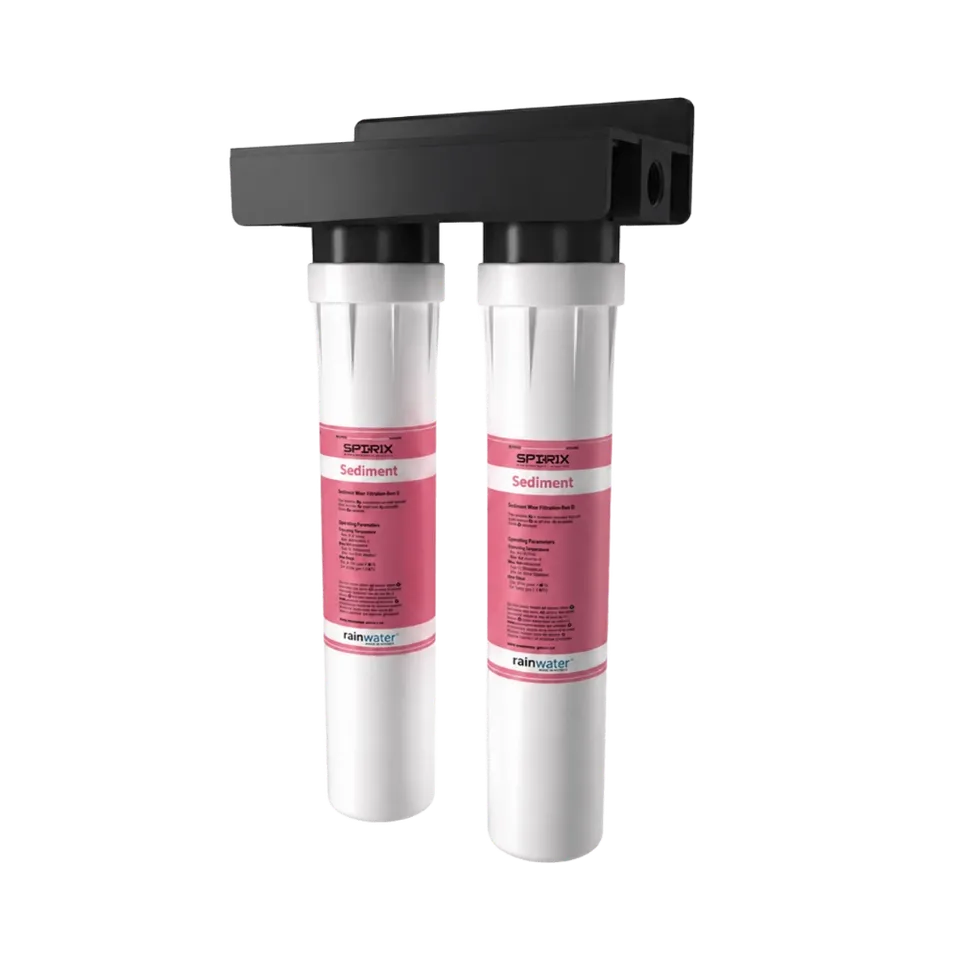
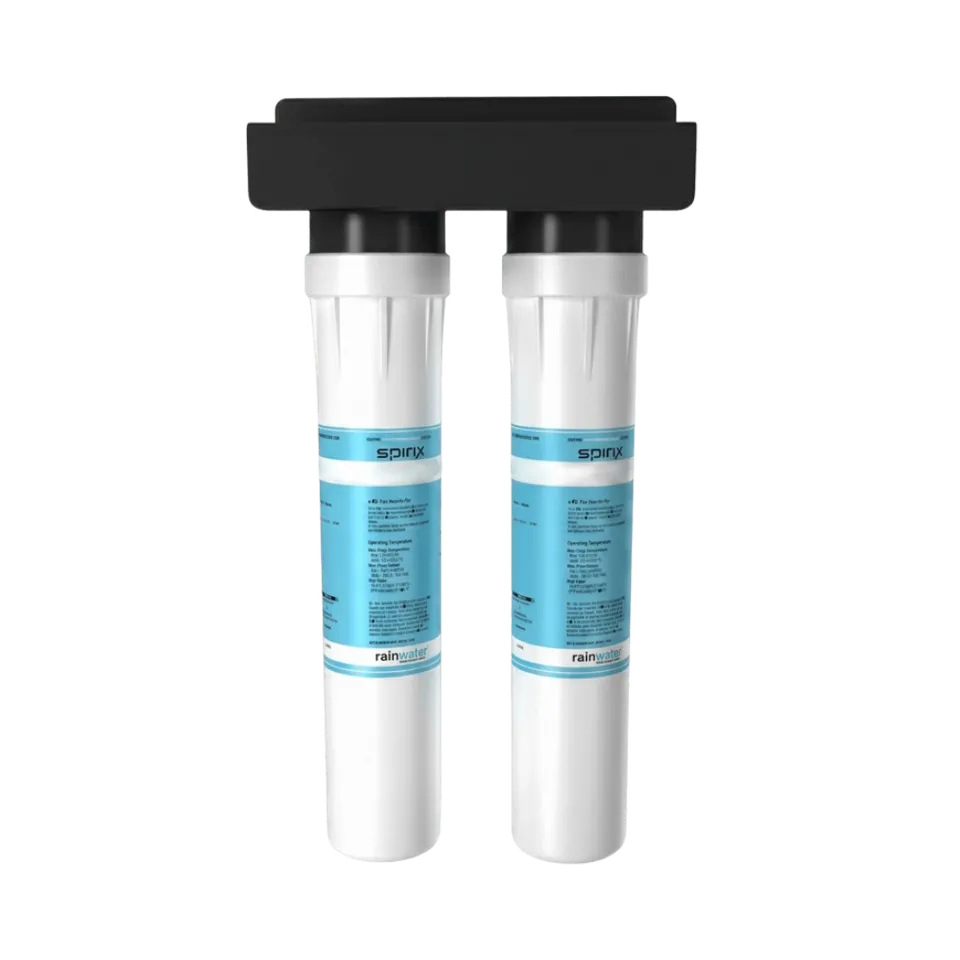
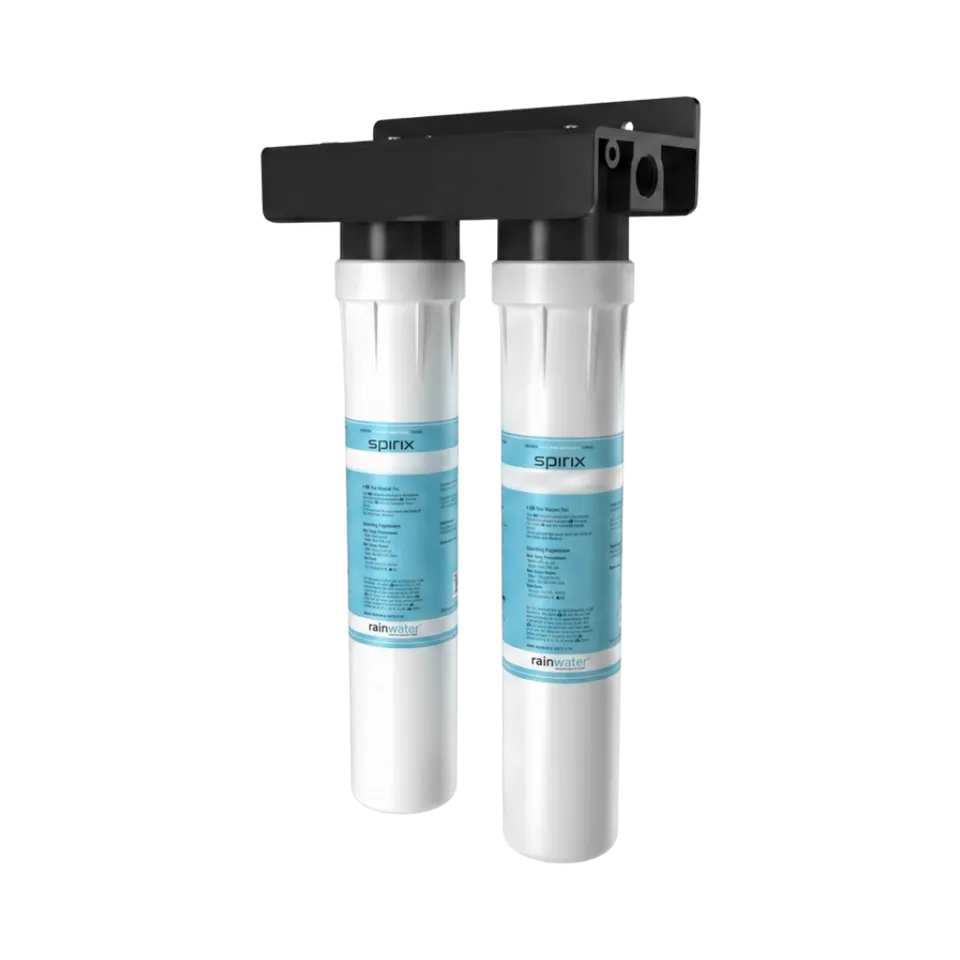
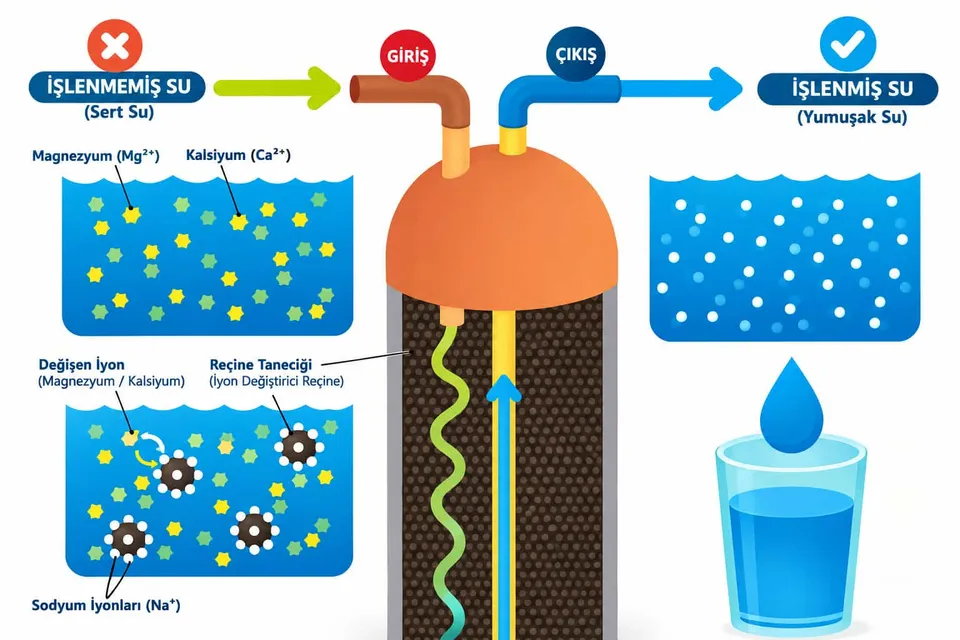
Rainwater's Espresso Com Spirix EP-20 Espresso Filter connects to the water inlet of the espresso machine. It reduces water hardness with ion exchange resin, while a coconut-shell activated carbon layer removes chlorine taste, odour and sediment. For filter coffee and batch brew machines, the Brew Com Spirix CL-20 Coffee Machine Filter reduces chlorine taste and limits limescale formation with activated carbon and a phosphate medium. On both systems, inlet and outlet pressure gauges make it easy to keep track of when the cartridge needs replacing.
In businesses where the water is very hard, a water softening system at the inlet may be worth considering to protect not only the coffee machine but all equipment, such as ice machines, dishwashers and combi ovens. You can find out which combination suits your business's water analysis on our Bar and Restaurant Water Purification Systems page, or consult our expert team on 444 0 420.
Frequently Asked Questions
Can you clean a coffee machine with citric acid?
Yes, citric acid is an effective, odourless descaler, especially for filter coffee machines. You can fully dissolve one to two tablespoons of citric acid in one litre of warm water, run the cycle, and then rinse at least twice with clean water. For espresso and bean-to-cup machines, check the user manual first.
What is the best thing for dissolving limescale?
Limescale is dissolved by acidic substances. For coffee machines, the safest option is a ready-made descaler recommended by the manufacturer, followed by food-grade citric acid. To stop limescale forming at all, however, the machine needs to be supplied with filtered water of reduced hardness.
Can you use vinegar in a coffee machine?
In simple filter coffee machines, diluted vinegar can be used if the manual allows it; however, it leaves an odour and requires a large number of rinses. In espresso and bean-to-cup machines, vinegar is generally not recommended as it can damage the seals and some metal parts.
Will a coffee machine break down if it is not descaled?
Yes, limescale that is neglected for a long time can lead to faults. A thickening layer of limescale causes the heater to overheat, the water channels to clog and the pump to strain; this can result in heating element, thermostat and valve failures.
If I use a water filter, will I still need to descale?
A correctly chosen filter that is replaced on time greatly reduces limescale build-up and makes descaling needed much less often. However, for the filter to remain effective, the cartridge must be replaced at the interval specified by the manufacturer; an exhausted cartridge will not stop limescale.