Water Purifier for Tap Water: Which System Is Enough?
Would you like to listen to this article?
Your browser reads the article aloud.
0:00 total 8:55
Summarise this article with AI:
Tap water is treated to drinking-water standards at source and chlorinated before it is distributed. Even so, the water at your tap is not the same as the water that left the treatment plant. It travels through kilometres of pipework, building water tanks and household plumbing, and on the way its taste, smell and hardness can change. In this guide we explain which water purifier is enough for tap water, which problem each system solves and how an under-counter purifier differs from whole-house treatment.
Key points
- Tap (mains) water is treated to drinking-water standards at source; the building's pipes, water tanks and plumbing can change the quality that reaches your tap.
- No single device solves every problem: carbon addresses taste and smell, sediment filters catch particles, softening tackles limescale and reverse osmosis improves drinking-water quality.
- Testing your water's hardness and TDS before you buy is the most reliable way to choose the right system.
Why Does Tap Water Need Further Purification?
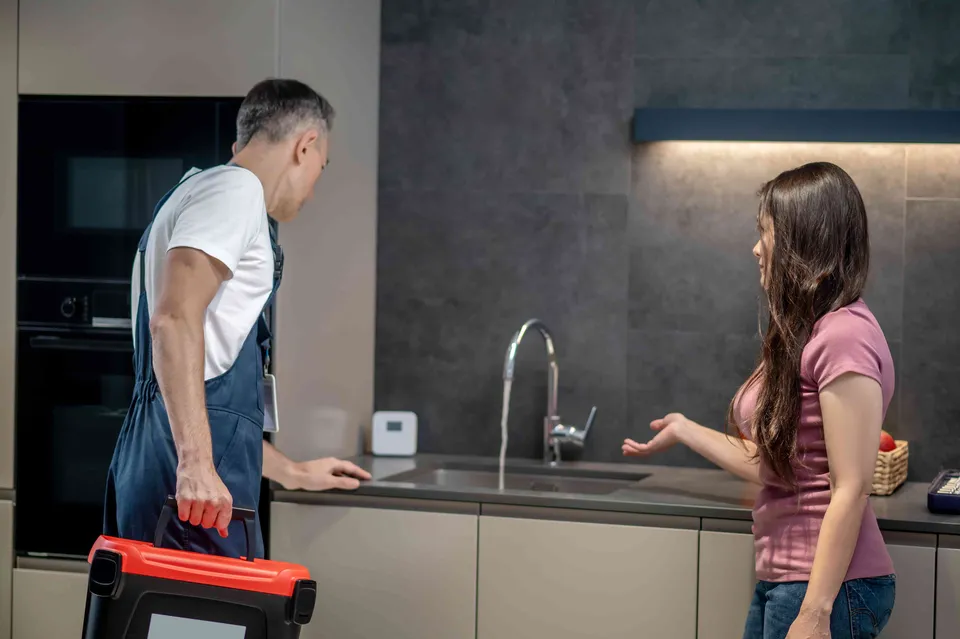
When people say tap water is drinkable, they mean the water at the treatment plant. The difference arises on the way to your home. Mains pipes can corrode over the years, water tanks in apartment buildings accumulate sediment if they are not cleaned regularly, and old galvanised pipes in the home can add rust and particles. This is why two flats on the same street can have tap water that tastes quite different.
The most common tap water problems are:
- Chlorine taste and smell: added for disinfection, it affects the taste of water, tea and coffee.
- Sediment, rust and cloudiness: particles from old pipes and tanks can make water look cloudy.
- Water hardness: calcium and magnesium show up as limescale on kettles, taps and washing machines.
- Dissolved minerals (TDS): one of the factors that shape how drinking water tastes, tracked by measuring TDS.
Which Water Purification Systems Are Used for Tap Water?
There is no single "best" system for tap water. The right choice depends on the problem you want to solve. Below we summarise the best fit for each issue.
For Chlorine Taste and Smell: Activated Carbon Filters
Activated carbon traps chlorine and some organic compounds on its surface, improving smell and taste. Tap filters and water jugs work on this principle. They are quick, affordable starting points but do not remove limescale or dissolved minerals. You can read about them in our guides to tap filters and water purification jugs.
For Sediment and Rust: Sediment Pre-Filters
A sediment filter catches sand, rust and similar particles. It is the first stage of most under-counter purifiers and is also used at building entrances. If your water arrives cloudy or rusty, the first fix is usually sediment pre-filtration.
For Drinking Water Quality: A Multi-Stage Under-Counter System
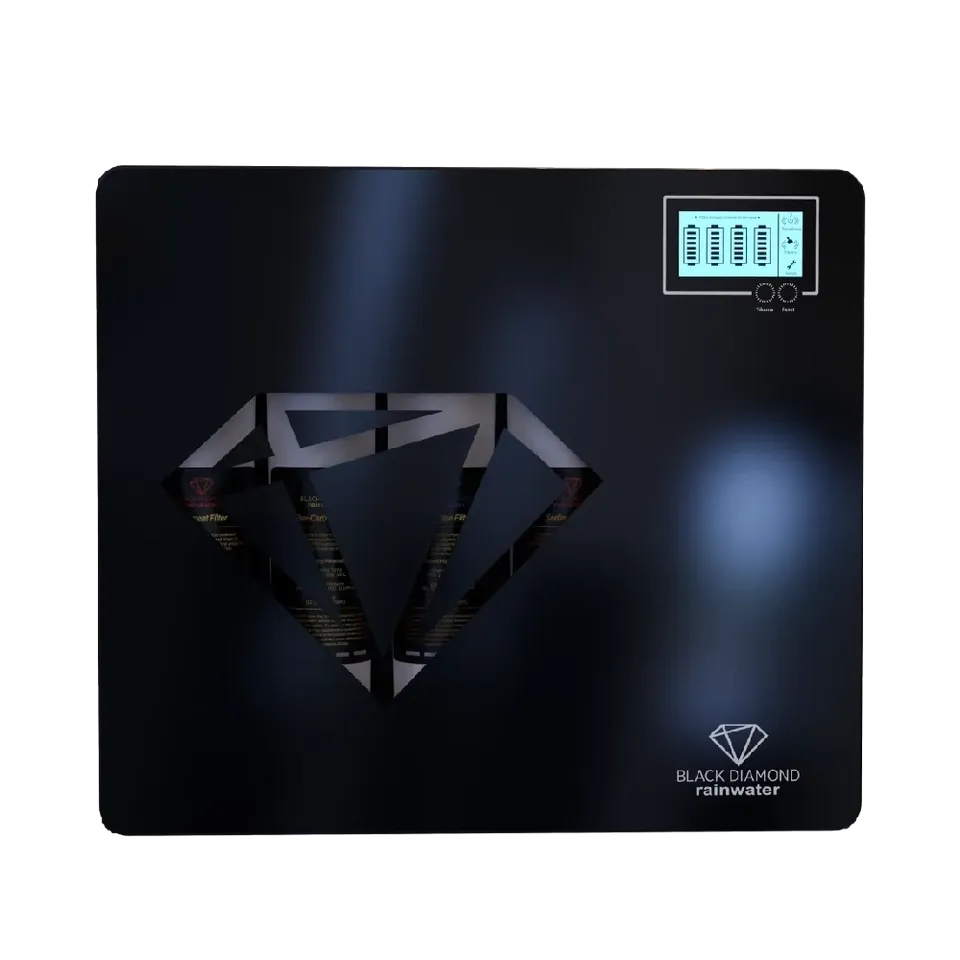
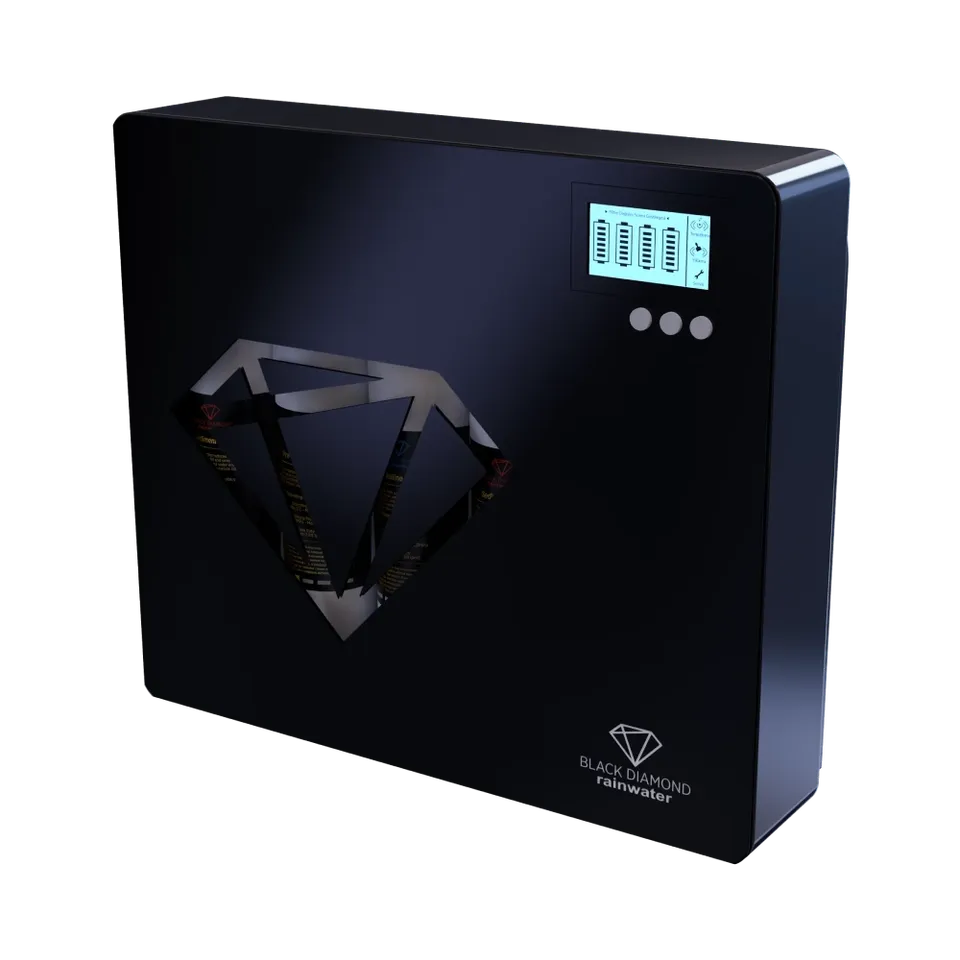
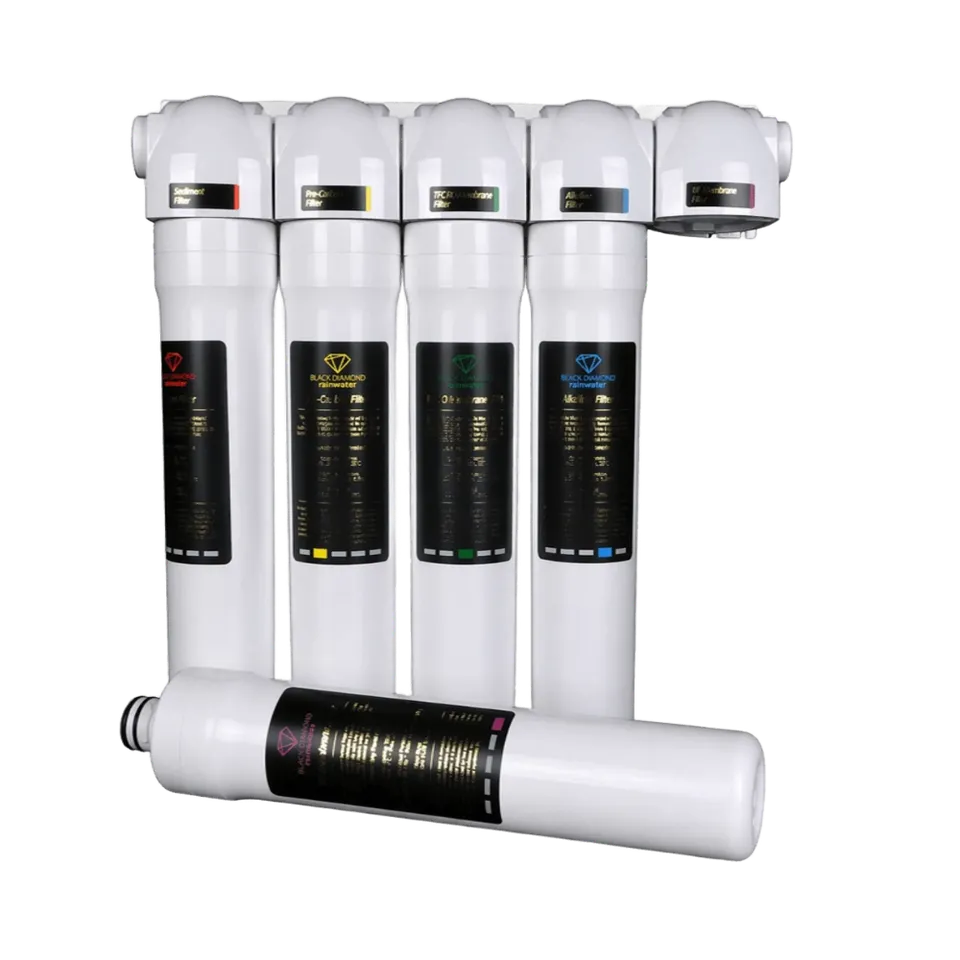
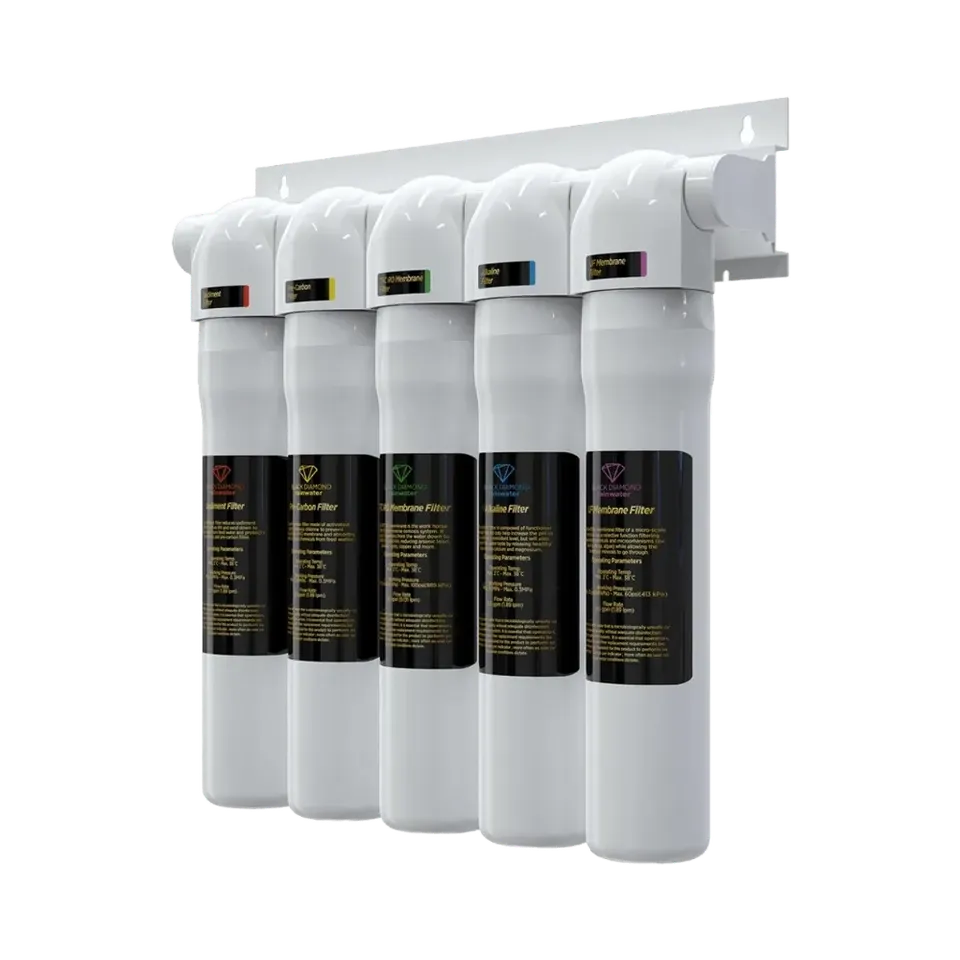
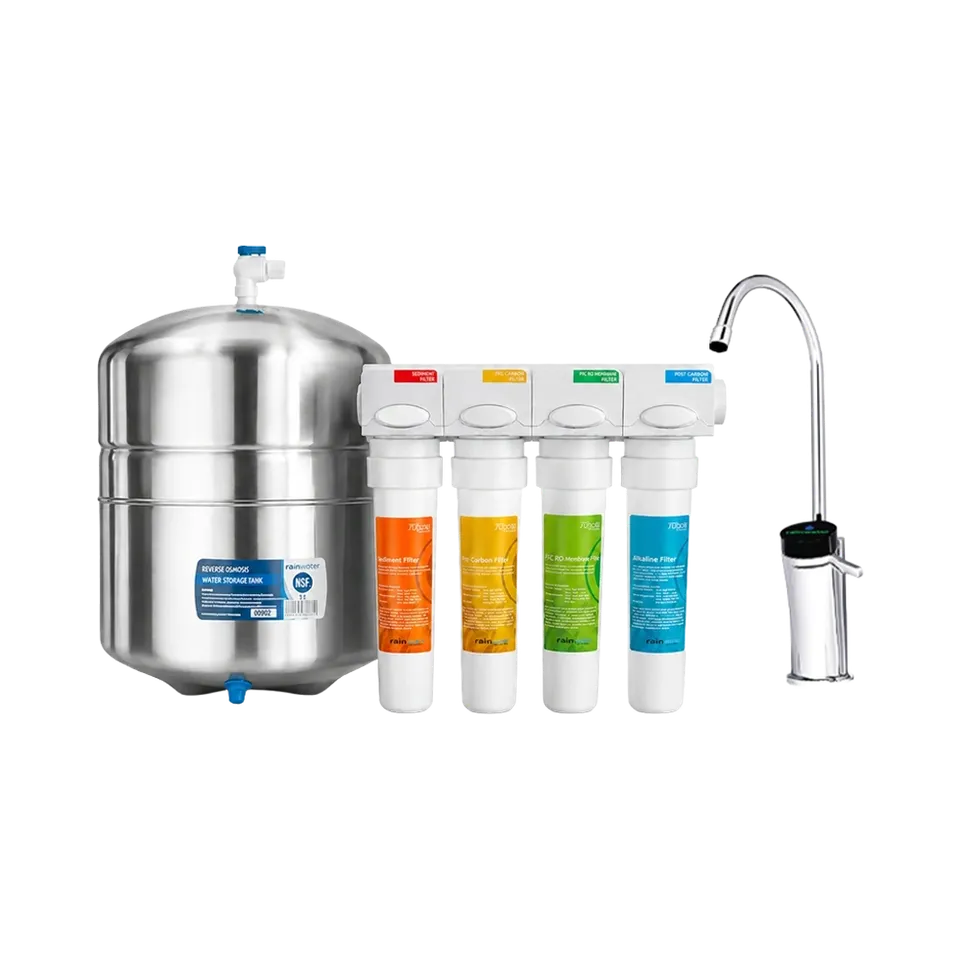
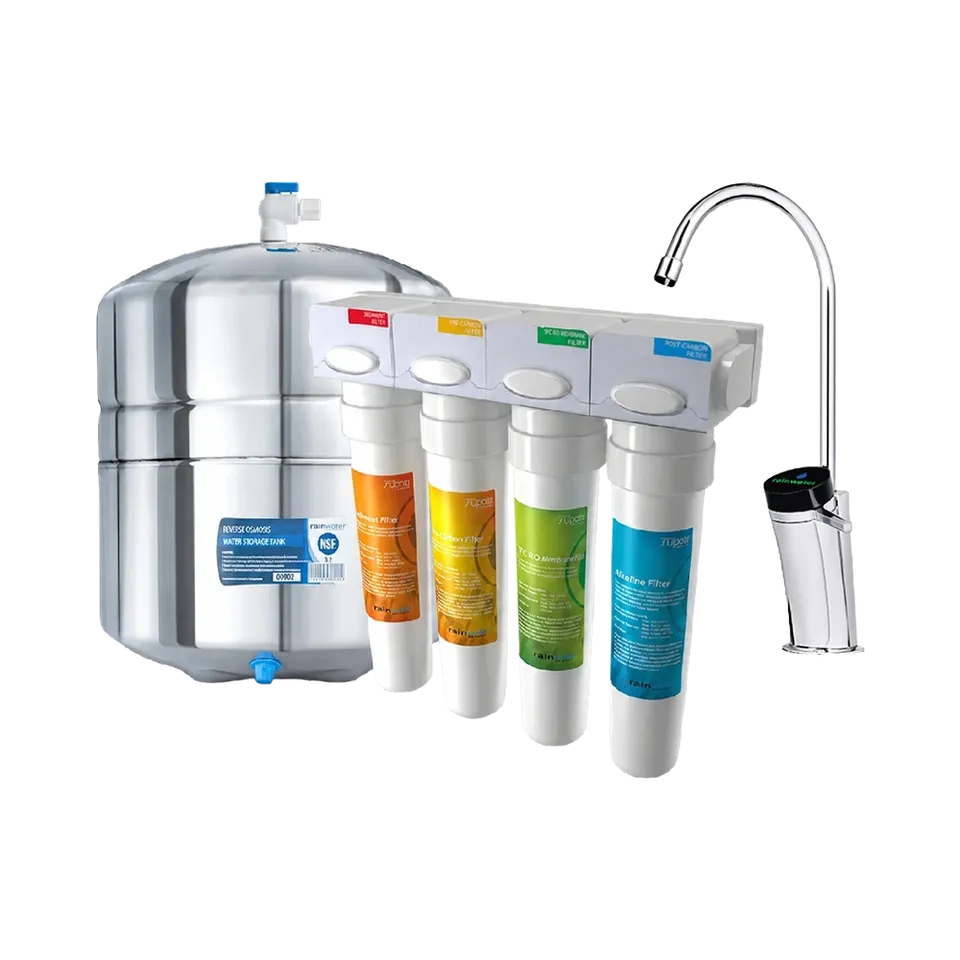
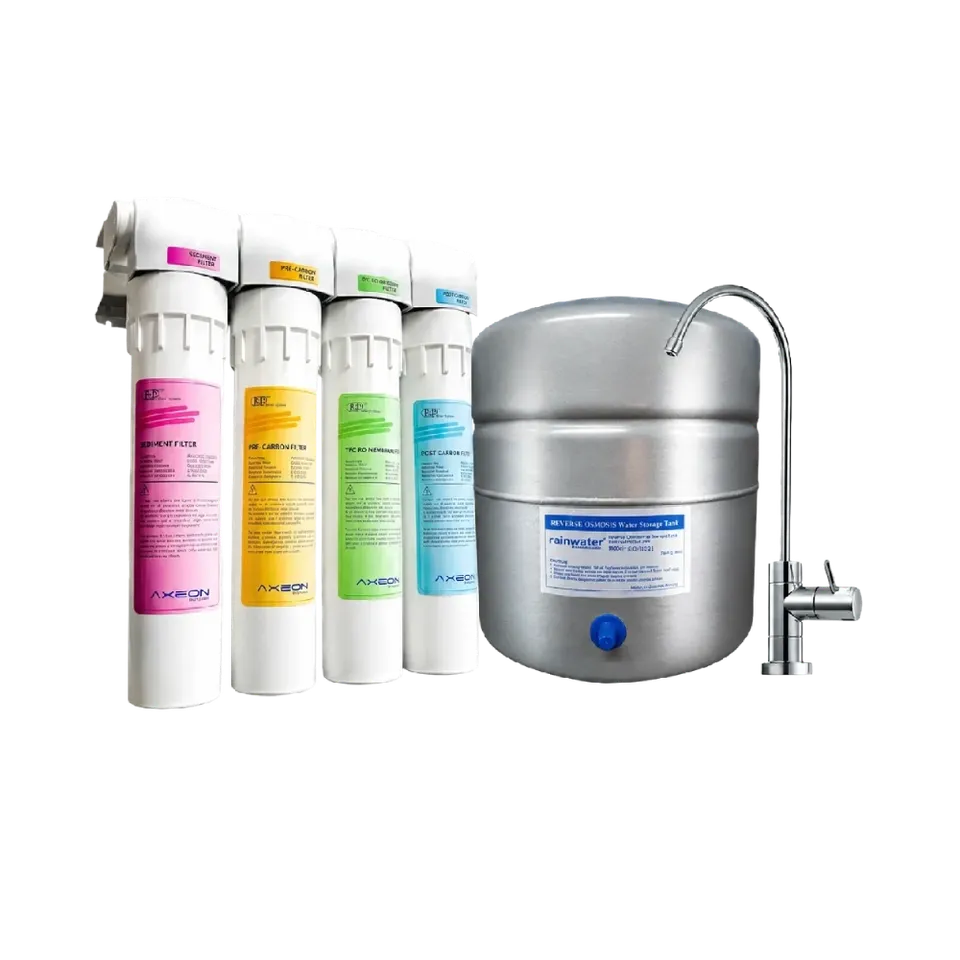
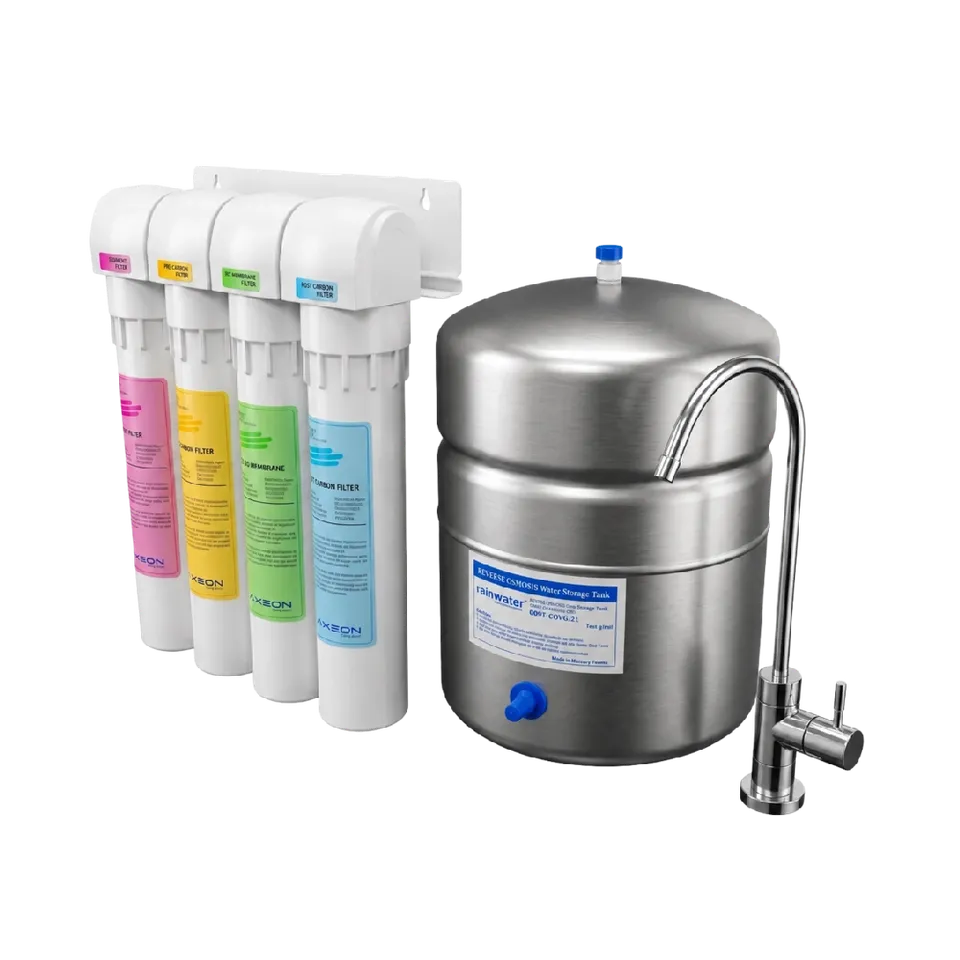
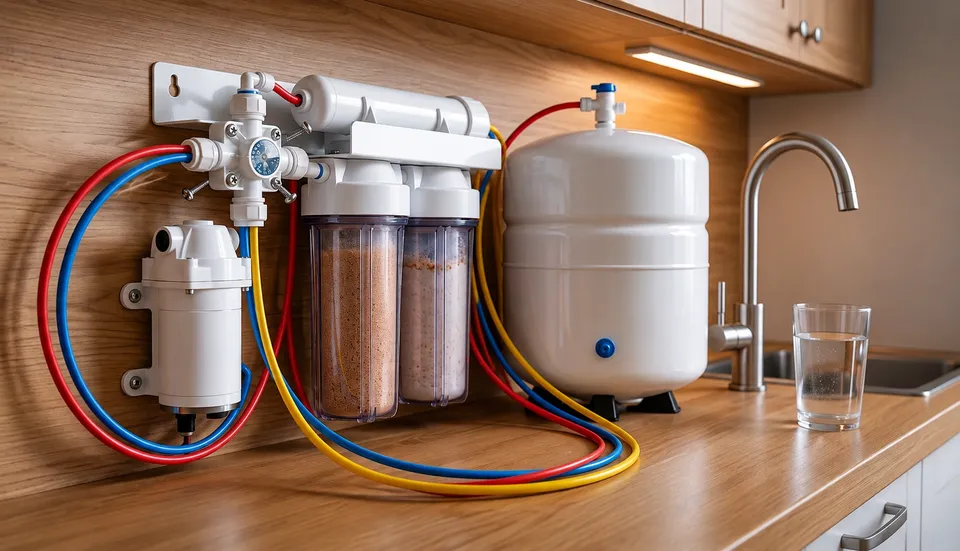
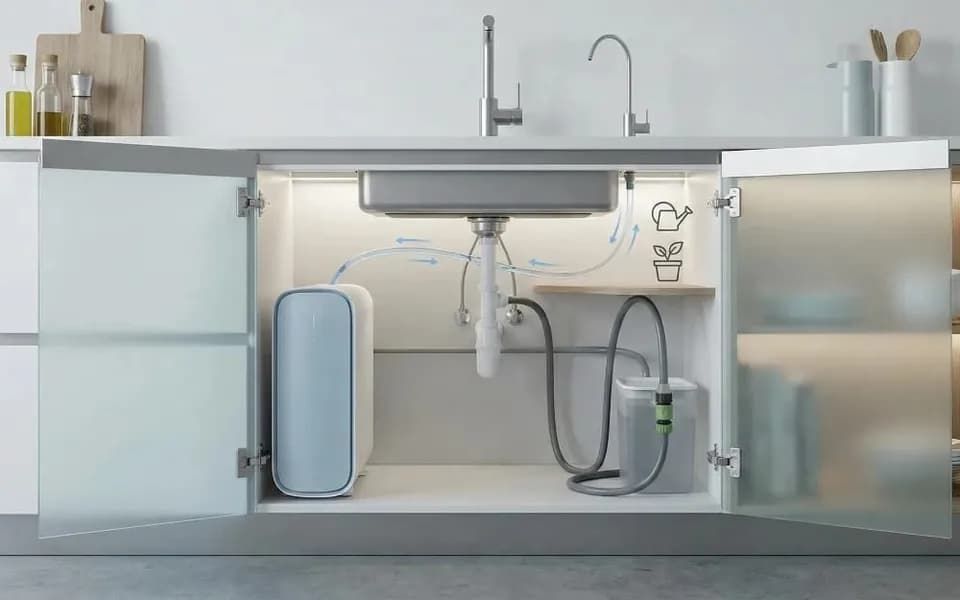
For drinking and cooking water in the kitchen, the most comprehensive solution is a multi-stage system that combines sediment, carbon and membrane stages. Reverse osmosis uses a very fine membrane to remove a large share of dissolved substances. Because these systems are installed inside the kitchen cabinet they are called under-counter water purifiers.
For Limescale: Water Softening
Drinking-water taste and limescale are two different problems. Limescale affects the whole home: taps, shower screens, boilers and washing machines. A purifier in the kitchen will not fix it. A water softener fitted at the main inlet reduces calcium and magnesium, and works through ion exchange. For protection across the whole home, see whole-house purification systems.
Under-Counter Purifier or Whole-House Treatment?
These two systems are not alternatives; they complement each other. The question that makes the decision easier is this: is the problem only with the water I drink, or with all the water in my home?
| Criterion | Under-counter purifier | Whole-house / building-entrance treatment |
|---|---|---|
| What it treats | Drinking and cooking water in the kitchen | All water entering the home |
| Main aim | Drinking-water quality, taste and smell | Limescale, sediment, rust, chlorine |
| Where it is installed | Inside the kitchen cabinet | At the main water inlet |
| Best for | People who want healthy, great-tasting drinking water | Homes where limescale and sediment damage plumbing and appliances |
What to Look at in Your Tap Water
Judging tap water by taste alone can be misleading. A few basic values help you choose the right device. The first is hardness, which reflects calcium and magnesium and determines how severe limescale will be. The second is TDS, the total amount of dissolved matter, which relates to the flavour of drinking water. The third is chlorine, which affects smell and taste and also calls for pre-filtration to protect delicate parts such as reverse osmosis membranes. The fourth is turbidity, which shows particles coming from pipes and tanks. You can learn these values through a water analysis or simple measuring devices.
For a deeper analysis, parameters such as nitrate and heavy metals can also be checked. These matter most in older buildings and certain regions. Most households do not need such a comprehensive analysis; hardness, TDS and chlorine give a good picture.
What to Watch for When Using a Tap Water Purifier
Once the device is installed, keeping the water quality high is partly down to you. If filters are not replaced on time, performance drops: a clogged sediment filter slows the flow and an exhausted carbon filter loses its ability to hold back chlorine. So do not skip the filter replacement schedule.
If you are away for a long time, it is also good practice to drain the water standing in the system and discard the first few litres on your return. With reverse osmosis systems, wastewater ratio is also worth considering; more efficient models reduce water waste.
How to Choose the Right System for Tap Water
The most reliable way to choose is to know your water. Before you decide:
1. Measure or have someone measure your water's hardness and TDS.
2. Define the problem: smell, limescale, sediment or general drinking-water quality?
3. Work out your household's water needs, since the number of people affects capacity.
4. Factor in your budget and the running cost of filter replacement.
5. Consider mineral balance. Reverse osmosis produces very pure water, and some users prefer systems that add minerals back.
Our guides which water purifier should I buy and types of water purifiers go into each criterion in more detail.
Do You Need a Water Purifier for Tap Water?
Because tap water is legally drinkable, a purifier is not mandatory. For most users the difference it makes is about taste, smell and convenience: clearer tea, less limescale in the coffee machine, a safer storage chain for children and infants, and no more carrying heavy bottled water. The answer depends on your water quality, your expectations and your budget, and it is always wiser to base the decision on a water analysis.
Let Us Help You Choose the Right Tap Water Solution
If you are unsure which system is enough for your home, Rainwater specialists can review your water and recommend a suitable system. You can browse under-counter water purifiers and whole-house purification systems, or contact us with your questions.
Frequently Asked Questions
Here are short, direct answers to the questions readers ask most often about this topic.
Is tap water safe to drink?
Tap water is treated to drinking-water standards at source. However, the pipes, building tank and plumbing it passes through can alter its taste, smell and quality, which is why many people choose an additional purifier for drinking water.
What is the best purifier for tap water?
It depends on your water's main problem. Multi-stage under-counter systems suit drinking-water quality, softeners suit limescale, sediment filters suit particles and rust, and activated carbon suits chlorine taste and smell.
Is a purifier mandatory for tap water?
No. Tap water is distributed within legal limits. A purifier is a choice for those who want better taste, smell and comfort.
How do I remove limescale from tap water?
Water softening systems are used to remove limescale because they reduce calcium and magnesium. An under-counter drinking-water purifier on its own does not provide a whole-home limescale solution.
Does purified tap water lose its minerals?
Reverse osmosis systems noticeably reduce mineral content. For those who want to keep a mineral balance, there are systems with mineral cartridges or mineral additions.